


























Red envelopes, known as "hongbao" in Mandarin, "lai see" in Cantonese, or "angpao" in Hokkien and Thai, represent one of the most enduring and meaningful traditions in Chinese culture. These crimson packets containing money transcend their material value to become vessels of blessing, good fortune, and wishes for prosperity. During Chinese New Year celebrations, the exchange of red envelopes creates connections across generations, strengthens family bonds, and perpetuates cultural values that have survived thousands of years.
The simple act of presenting a red envelope carries profound significance. The color red symbolizes luck, happiness, and protection from evil spirits in Chinese culture. The money inside represents the transfer of fortune and energy from giver to receiver. The ritual itself—presenting with both hands, receiving with gratitude, opening in private—follows etiquette refined across centuries. This tradition transforms ordinary cash into something sacred, meaningful, and deeply personal.
Ancient Origins and Historical Evolution
The red envelope tradition traces its roots to ancient China during the Qin Dynasty over 2,000 years ago. The earliest form was called "yasui qian" or "money to suppress evil spirits." Parents would thread coins with red string and place them under children's pillows on New Year's Eve. This practice aimed to protect children from Sui, a demon believed to harm sleeping children by touching their heads. The red color and the money combined as talismans against malevolent forces.
Legend tells of a village terrorized by this demon Sui who would visit homes on New Year's Eve. One year, parents gave their child eight coins to play with before bed. The child wrapped the coins in red paper and placed them under the pillow. When Sui tried to attack, the coins emitted light that frightened the demon away. News spread, and the practice of giving "yasui qian" became widespread as protection became blessing.
Ancient Red Envelope Elements:
- Red string coins: Original form threading copper coins with red thread
- Protective purpose: Ward off evil spirits and demons from children
- Nocturnal ritual: Placed under pillows on New Year's Eve specifically
- Transformation: Protection evolved into blessing and fortune transfer
During the Song Dynasty (960-1279 CE), the practice evolved from threaded coins to actual envelopes. As paper money became more common, people needed containers to present cash gifts. Red paper envelopes emerged as the perfect solution—maintaining the protective red color while accommodating the new currency format. The envelope also added an element of mystery and anticipation, as recipients couldn't immediately see the amount.
The Qing Dynasty (1644-1912 CE) formalized many red envelope customs still observed today. Elders giving to younger generations became standard practice. Specific amounts with auspicious numbers gained significance. The ritual presentation style developed. These centuries refined red envelopes from simple protective charms into sophisticated vehicles of blessing carrying complex cultural meaning.
🧧 Try Red Envelope Randomizer →
Symbolism of Red in Chinese Culture
Red dominates Chinese celebrations for reasons deeply embedded in cultural consciousness. The color represents fire, one of the five elements in Chinese philosophy, associated with warmth, energy, and vitality. Red symbolizes the sun, blood, and life force itself. In a culture where symbolism permeates every aspect of existence, red became the ultimate color of celebration, protection, and good fortune.
Historical associations reinforced red's positive meanings. Ancient China's mythological emperor who civilized humanity wore red. The vermillion bird, one of four celestial animals guarding cardinal directions, represented the south and summer with red plumage. Red doors marked houses of respect and honor. Wedding ceremonies featured red everywhere—clothing, decorations, invitations—to ensure happiness and ward off misfortune.
Cultural Meanings of Red:
- Life and vitality: Color of blood representing energy and existence
- Fire element: Warmth, transformation, and purifying power
- Joy and celebration: Standard color for all happy occasions
- Protection from evil: Repels demons, ghosts, and negative influences
- Luck and fortune: Attracts positive energy and auspicious outcomes
The power of red extends beyond aesthetics into genuine belief systems. Even today, wearing red underwear during one's zodiac year (every twelve years) supposedly protects against bad luck. Red decorations cover homes during New Year. Birth announcements use red paper. The consistency of red's use across centuries and contexts demonstrates its profound significance in Chinese cultural psychology.
For red envelopes specifically, the color transforms ordinary money into blessed fortune. The crimson packet sanctifies its contents, converting cash from mere currency into a vehicle of goodwill, blessing, and positive energy transfer from giver to receiver.
Traditional Etiquette and Cultural Rules
Red envelope etiquette follows precise rules that vary by region but share common principles. Understanding these customs prevents social mistakes and demonstrates cultural awareness and respect. The etiquette surrounding red envelopes rivals wedding customs in complexity and importance.
Who Gives to Whom:
- Elders to children: Parents, grandparents, older relatives give to younger generation
- Married to unmarried: Married couples give to single friends and relatives
- Employers to employees: Business owners give bonuses in red envelopes
- Never reverse: Children never give to parents on New Year traditionally
Married status matters more than age in some contexts. A forty-year-old bachelor might receive from a twenty-five-year-old married cousin. This reflects traditional values where marriage represented maturity and stability regardless of chronological age. The married person has "arrived" at an established life stage and shares fortune with those still in transition.
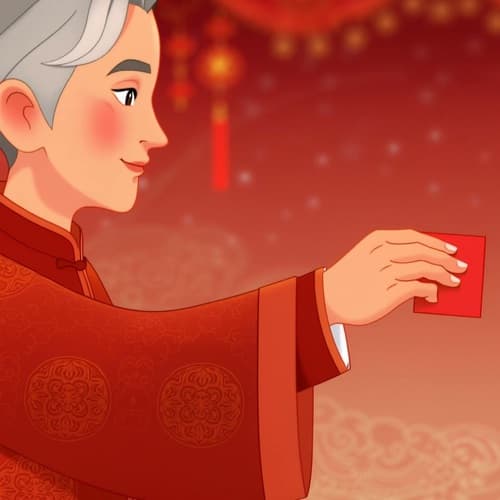
The presentation ritual requires both hands. Offering a red envelope with one hand appears disrespectful or casual. Using both hands demonstrates sincerity, respect, and the importance of the gesture. Recipients likewise receive with both hands, acknowledging the blessing offered. This bilateral exchange reinforces the gravity and meaning of the transaction.
Proper Presentation Customs:
- Two-handed giving: Both giver and receiver use both hands respectfully
- Auspicious phrases: "Gong xi fa cai" (congratulations and prosperity) accompanies giving
- Private opening: Never open envelopes in front of giver—appears greedy
- Gracious acceptance: Accept first offer without refusing or examining amount
- Keep on person: Children traditionally sleep with envelopes under pillows
Amount selection follows complex numerology. Even numbers are lucky except four, which sounds like "death" in Chinese dialects and is absolutely avoided. Eight sounds like "prosperity" and is highly desirable. Six represents smooth progress. Nine sounds like "longevity." Amounts like 88, 188, 288, or 888 are popular for their auspicious sound symbolism.
Crisp new bills are essential. Giving old, crumpled money in red envelopes appears disrespectful and cheapens the blessing. Banks see tremendous demand for new bills before Chinese New Year as people prepare envelopes. Some people iron bills to ensure crispness. This attention to physical currency condition demonstrates that presentation matters as much as amount.
🎴 Learn About Fortune Traditions →
Lucky Numbers and Auspicious Amounts
Chinese numerology profoundly influences red envelope amounts. Numbers aren't merely quantities—they're symbols with meanings based on phonetic similarities to other words. This linguistic connection between numbers and concepts creates a system where certain amounts become inherently lucky or unlucky regardless of their mathematical value.
The number eight reigns supreme among lucky numbers because "ba" (eight in Mandarin) sounds similar to "fa" meaning prosperity or fortune. Any amount containing eights gains auspiciousness. 88 yuan represents double fortune. 188 suggests continuous prosperity (one meaning beginning or certainty, plus double eight). 888 amplifies the blessing threefold. Wealthy families might give 8,888 or even 88,888 for major celebrations.
Lucky Numbers and Their Meanings:
- 8 (ba): Sounds like prosperity (fa), most fortunate number
- 6 (liu): Smooth, flowing progress without obstacles
- 9 (jiu): Longevity, long-lasting, eternal blessings
- 2 (er): Pairs, harmony, good things coming in twos
- 168: Continuous smooth prosperity (combining meanings)
Six carries significance as "liu," phonetically similar to words meaning smooth or flowing. Amounts like 66, 166, or 666 suggest smooth progress through life without obstacles. Nine sounds like "jiu" meaning long-lasting or eternal, making 99 or 999 wish for enduring fortune. These numbers combine in amounts like 168 (smooth, continuous prosperity) or 998 (long-lasting fortune leading to prosperity).
Four must be absolutely avoided. "Si" (four) sounds nearly identical to "si" (death) in Mandarin and other dialects. Giving 40, 400, or 14 yuan would be horrifically inauspicious, essentially wishing death upon the recipient. Even buildings skip fourth floors (3rd floor followed by 5th), and phone numbers containing four sell for less. This superstition runs so deep that some people avoid four entirely across all life contexts.
Western amounts don't carry these connotations. A $50 bill appears neutral to Western recipients, but Chinese receivers might prefer $60 or $80 for their smoother numerology. Understanding these preferences allows thoughtful gift-giving that respects cultural values. The amount matters less than demonstrating awareness of symbolic meaning.
Regional variations exist. Cantonese speakers might emphasize different number meanings based on their dialect's phonetics. Southern Chinese traditions may differ from northern customs. Southeast Asian Chinese communities developed their own preferences influenced by local cultures. Research specific regional customs when possible to show deeper cultural understanding.
Regional Variations Across Chinese Communities
Chinese New Year celebrations and red envelope customs vary significantly across different Chinese communities worldwide. Each region developed unique traditions while maintaining core symbolic meanings. Understanding these variations reveals the diversity within Chinese culture and how traditions adapt to local contexts.
Mainland China Customs:
- Amount range: Varies wildly from 100 yuan in cities to 10,000+ for close family
- Digital hongbao: WeChat and Alipay red envelopes now extremely popular
- Group hongbao: Digital envelopes split randomly among group chat participants
- Return home: Migrant workers bring red envelopes to rural families
- New bills obsession: Banks add special new bill exchange services before New Year
In Hong Kong, amounts tend toward higher values reflecting the city's wealth. A hundred Hong Kong dollars (about $13 USD) might be standard minimum for casual relationships, while close family receives thousands. The term "lai see" dominates rather than "hongbao." Companies give lai see to employees, sometimes all staff regardless of marriage status, transforming tradition into corporate bonus culture.
Taiwan maintains traditional customs strongly while developing unique variations. Red envelopes often feature elaborate designs with zodiac animals, flowers, and calligraphy. Amounts follow numerology strictly. Some families include lottery tickets in envelopes, adding extra luck possibility. Taiwan's red envelopes emphasize artistic design as much as contents.
Southeast Asian Adaptations:
- Singapore/Malaysia: Mix Chinese and local customs, amounts in local currency
- Thailand (angpao): Thai-Chinese maintain traditions, amounts typically 20-1,000+ baht
- Indonesia: Red envelopes remain important despite Muslim majority context
- Philippines: Chinese-Filipino communities adapt amounts to peso values
- Vietnam (li xi): Vietnamese adopted red envelope traditions with local variations
Overseas Chinese communities in Western countries face unique challenges maintaining traditions. Red envelopes might contain local currency, requiring translation of numerology to dollars, pounds, or euros. Second and third-generation Chinese may give envelopes without fully understanding symbolism. These communities often simplify customs while preserving core meaning—elders still give to children, red packets still convey blessing, even if specific etiquette loosens.
Digital red envelopes revolutionized the tradition in China. WeChat's digital hongbao feature launched in 2014 allows sending virtual red envelopes through the app. Users can send fixed amounts or create "lucky envelopes" that randomly split a sum among recipients—first recipient might get most, last might get pennies, adding gaming excitement. This digital transformation preserved tradition while adapting to mobile-first culture.
🌟 Try Other Random Selection →
Modern Adaptations and Digital Evolution
Technology transformed red envelope traditions in ways unimaginable to previous generations. Digital hongbao emerged as one of China's most successful mobile payment features, with billions of envelopes sent annually during Chinese New Year. This digitalization doesn't replace physical envelopes—it supplements them, reaching people separated by distance while maintaining symbolic meaning.
WeChat and Alipay dominate digital red envelope markets. Users link bank accounts or credit cards, then send amounts from tiny sums (0.01 yuan joke amounts) to generous gifts (thousands of yuan). The apps add festive animations—coins falling, firecrackers exploding, zodiac animals dancing—maintaining celebration despite virtual format. Recipients "open" envelopes by tapping, creating digital approximation of physical unwrapping anticipation.
Digital Red Envelope Features:
- Instant delivery: Send to anyone, anywhere, immediately across any distance
- Group distribution: One envelope split randomly among group members
- Animation effects: Festive graphics maintain ceremonial feeling despite virtuality
- Receipt tracking: Know exactly who received what amount
- Gamification: Random splits create excitement and comparison among recipients
Corporate marketing weaponized digital hongbao. Companies sponsor massive envelope campaigns during New Year, distributing millions of tiny amounts to billions of users who shake their phones to "catch" falling envelopes. This turns tradition into viral marketing where participating feels like joining cultural celebration while actually engaging with brand advertising.
Social dynamics shifted with digitalization. Younger people send joke amounts to friends (0.99 yuan for "long friendship"). Office workers send group envelopes where random distribution creates competitive excitement. Families separated by migration send real money digitally, maintaining tradition despite physical distance. Digital hongbao serves functions physical envelopes cannot—instant, playful, far-reaching.
Concerns arise about digitalization diminishing traditional meaning. Physical envelopes require effort—obtaining new bills, selecting amounts, purchasing beautiful envelopes, presenting in person. This effort demonstrates care and intention. Digital sending reduces ceremony to taps on screens. Older generations sometimes resist digital hongbao as insufficiently respectful or too impersonal.
Yet digital evolution arguably strengthened tradition by making it accessible to younger, tech-native generations. Millennials and Gen Z might not carry cash at all but enthusiastically participate in digital hongbao. The tradition survives by adapting. Whether physical or digital, the core meaning endures—elders blessing younger generations, sharing fortune, transferring positive energy and goodwill.
Red Envelopes in Business and Corporate Contexts
Red envelopes extend beyond family into business relationships, transforming personal tradition into corporate custom. Employers give employees red envelopes as year-end bonuses, combining financial compensation with cultural blessing. This practice maintains traditional form while serving modern employment functions.
Company hongbao amounts vary wildly based on industry, position, and business performance. Small businesses might give several hundred yuan per employee. Major corporations distribute thousands or tens of thousands in red envelopes to managers. Some companies give all employees equal amounts democratically. Others vary amounts by seniority, performance, or position, using traditional form for modern meritocratic purposes.
Corporate Red Envelope Practices:
- Year-end bonuses: Annual performance bonuses given in red envelopes
- New Year gifts: Smaller amounts distributed around Chinese New Year celebrations
- Client relationships: Companies give to important clients maintaining guanxi
- Employee retention: Generous hongbao demonstrates appreciation encouraging loyalty
- Ceremony preserved: Bosses personally hand envelopes even in large companies
The personal presentation matters in corporate contexts. Even large companies try having executives personally hand red envelopes to employees rather than simply adding bonuses to paychecks. This physical handover maintains traditional meaning—the boss as elder blessing workers as symbolic children. The ceremony creates moments of human connection in impersonal corporate environments.
Red envelopes facilitate business relationships in Chinese culture where "guanxi" (relationships and networks) drives success. Giving appropriate hongbao to business partners, suppliers, or clients during New Year maintains relationships and demonstrates respect. These aren't bribes—they're culturally sanctioned relationship maintenance using traditional forms.
However, corruption concerns arise when red envelopes cross from cultural gift-giving into illegal payment. Government officials receiving substantial hongbao from businesses seeking favorable treatment transforms tradition into bribery. China's anti-corruption campaigns specifically target excessive red envelope giving in official contexts. The line between cultural custom and corruption remains contentious and complex.
International businesses operating in Chinese markets face red envelope dilemmas. Should foreign companies give hongbao to Chinese employees? What amounts? Following local customs builds cultural rapport. Ignoring traditions might seem disrespectful. Many international firms embrace red envelope giving as culturally sensitive practice demonstrating respect for local employees.
🎯 Learn About Cultural Traditions →
Children's Red Envelopes and Educational Values
For children, red envelopes represent magical moments of receiving unexpected fortune. The thrill of accumulating multiple envelopes from various relatives creates excitement that makes Chinese New Year unforgettable. Children anticipate red envelopes the way Western children anticipate Christmas presents—as concrete rewards making abstract holidays tangible.
Parents face decisions about children's red envelope money. Should children keep all they receive? Should parents confiscate for savings? Should amounts given by relatives be reciprocated equally when those relatives' children visit? These questions reveal red envelopes as teaching tools for financial literacy, gratitude, and family reciprocity.
Parental Approaches to Children's Hongbao:
- Full retention: Children keep everything, learning to manage unexpected windfalls
- Partial savings: Parents bank portion, children keep remainder immediately
- Complete confiscation: Parents save all money "for your future" (sometimes controversial)
- Reciprocal tracking: Parents note amounts received to match when reciprocating
- Financial education: Using hongbao to teach saving, spending, and gratitude
Some families use red envelopes to teach financial responsibility. Parents might require children to save percentage of hongbao money, spend some on books or education, donate portion to charity, and keep remainder for discretionary spending. This transforms windfall into financial education opportunity, teaching money management through culturally meaningful context.
The reciprocity aspect teaches children about family obligations and relationships. Children learn that receiving red envelopes creates obligations—showing gratitude, remembering who gave generously, potentially reciprocating when they become adults. Red envelopes map family relationships through monetary exchange, making abstract kinship concrete.
Red envelope amounts children receive generally increase with age. Younger children might get smaller amounts—50-100 yuan from grandparents. Teenagers receive more as they understand money's value and might have expenses. This scaling teaches that maturity brings increased responsibility and resources. The progression from small recipient to potential future giver marks life stages.
Cultural transmission occurs through red envelopes. As children receive hongbao year after year, observe parents preparing envelopes for others, and learn the customs around appropriate amounts and presentation etiquette, they absorb tradition. By the time they marry and begin giving red envelopes themselves, the customs feel natural—successfully transmitted across generations.
Wedding Red Envelopes and Marriage Customs
While New Year red envelopes dominate discussions, wedding hongbao represents equally important tradition. Wedding guests give red envelopes containing money instead of or in addition to physical gifts. This cash gift helps newlyweds start their life together and offsets wedding costs. Wedding hongbao follows distinct customs from New Year envelopes.
Wedding envelope amounts depend on relationship closeness, guest's financial ability, and regional customs. Close family might give thousands. Friends give hundreds. Colleagues give modest amounts. Some couples track precisely who gave what amount, as this information guides how much they'll give when those guests marry—creating decades-spanning reciprocity networks.
Wedding Red Envelope Customs:
- Guest gifts: All guests give red envelopes rather than registry gifts
- Amount calculation: Guests consider meal cost plus relationship closeness
- Collection table: Designated table at wedding entrance receives envelopes
- Immediate counting: Couples or families count envelopes shortly after reception
- Reciprocity records: Track amounts given to match in future gift-giving
The practical function of wedding hongbao somewhat diminishes romantic symbolism. Cynically viewed, guests essentially pay for their meals while contributing to wedding costs. The couple might calculate total hongbao received against total wedding expenses, treating envelopes as revenue against costs. This transactional aspect coexists uneasily with blessing and celebration symbolism.
However, wedding red envelopes maintain deeper meaning beyond crude economics. Giving generous amounts beyond meal cost demonstrates genuine celebration of the union and support for the couple. Amounts with auspicious numbers convey blessings for happy, prosperous marriage. The red envelope transforms required gift into vehicle of goodwill that money alone wouldn't carry.
Birth celebrations also involve red envelopes. When families announce births, visiting friends and relatives bring hongbao for the newborn. This "baby's first fortune" welcomes the child into the world with financial blessing. Parents typically save these birth hongbao for the child's future education or needs.
Red envelopes mark every major life transition—births, weddings, sometimes birthdays, graduations, or achievements. This consistent use across milestone events makes hongbao the thread connecting life's chapters. The red envelope becomes the culture's primary vehicle for marking, celebrating, and blessing life's important moments.
🌠 Try Visual Selection Methods →
Superstitions, Taboos, and Bad Luck Avoidance
Red envelope customs include numerous taboos and superstitions that must be carefully avoided. Violating these brings bad luck to giver, receiver, or both. While younger generations might dismiss superstitions as outdated, older relatives take them seriously, and violations can cause genuine offense.
Critical Red Envelope Taboos:
- Never give empty envelopes: Empty hongbao symbolizes empty fortune, curses recipient
- Avoid odd amounts: Even numbers represent pairs and completeness except auspicious odds
- No number four: Four sounds like death, absolutely forbidden in any amount
- Never use old bills: Wrinkled, dirty money disrespects recipient and diminishes blessing
- Don't give white envelopes: White symbolizes death and mourning, completely inappropriate
- Never open in front of giver: Appears greedy, disrespectful, and ungrateful
Opening red envelopes immediately upon receiving breaks major etiquette. This appears greedy—suggesting you care only about amount rather than blessing. It makes givers uncomfortable—what if the amount disappoints? What if recipient expected more? Opening later in private preserves mystery and prevents awkward comparisons or reactions.
The empty envelope taboo runs particularly deep. Accidentally giving or receiving empty red envelopes reportedly brings terrible luck—financial troubles, missed opportunities, blocked fortune. Some people check envelopes multiple times before sealing to ensure money is inside. If discovering an envelope was accidentally given empty, immediate rectification with profuse apologies supposedly mitigates bad luck.
Color restrictions extend beyond red. While red envelopes dominate Chinese culture, white envelopes appear at funerals containing "money for the journey" to help deceased in afterlife. Giving white envelopes for celebrations conflates blessing with death—extremely inauspicious. Some Southeast Asian cultures use different colored envelopes (gold, pink) for specific occasions, so understanding local custom prevents mistakes.
Timing matters as well. Giving red envelopes too early or late might reduce effectiveness. New Year hongbao should be given during New Year period specifically. Wedding envelopes must be given at the wedding or shortly after. Birthday hongbao work around actual birthday. Matching timing to occasion ensures blessing aligns with the life event being celebrated.
Refusing red envelopes requires careful handling. Adults offered hongbao by elders face dilemma—accepting might seem childish, but refusing might insult the giver. Polite refusal followed by gracious acceptance after insistence navigates this delicately. The ritual of "decline-insist-accept" demonstrates humility while honoring the giver's intention.
🪙 Learn About Luck and Randomness →
Red Envelopes in Southeast Asian Chinese Communities
Southeast Asian Chinese communities maintain red envelope traditions while adapting to local contexts. Thailand, Malaysia, Singapore, Indonesia, Vietnam, and the Philippines each developed distinctive red envelope cultures that blend Chinese customs with indigenous influences.
In Thailand, red envelopes are called "angpao" (from Hokkien dialect). Thai-Chinese businesses close for Chinese New Year, giving employees angpao bonuses. Thai people without Chinese ancestry increasingly participate in angpao giving as commercial culture spreads Chinese customs. Amounts typically range from 20 baht (token amounts for distant relations) to several thousand baht for close family.
Thai Angpao Characteristics:
- Hokkien influence: Southern Chinese dialect shapes terminology and customs
- Buddhist integration: Some angpao given at temples during Chinese New Year
- Commercial availability: 7-Eleven and stores sell decorative angpao packets everywhere
- Simplified customs: Less rigid adherence to all traditional taboos
- Thai currency amounts: Auspicious number principles applied to baht denominations
Malaysian and Singaporean Chinese maintain strongest traditions due to large Chinese-descent populations. These countries observe Chinese New Year as national holidays. Red envelopes flow freely across ethnic communities—non-Chinese Malaysians and Singaporeans often receive hongbao from Chinese friends and colleagues, participating in tradition despite different ancestries.
Singapore's multicultural approach sees red envelope concepts spreading to other ethnic celebrations. During Hari Raya (Muslim celebration), green envelopes with money are given. During Deepavali (Hindu festival), decorative envelopes appear. This cross-cultural envelope exchange shows traditions evolving through proximity and mutual influence.
Indonesia's Chinese-Indonesian community faced historical suppression of cultural practices but maintained red envelope customs privately. Political liberalization allowed open celebration again. Indonesian red envelopes might use Indonesian rupiah with auspicious numbers, though four remains avoided. The persistence of tradition despite decades of suppression demonstrates its deep cultural importance.
Vietnamese "li xi" red envelopes during Tet (Vietnamese New Year) demonstrate how neighboring cultures adopted and adapted Chinese customs. While Vietnamese tradition derives from Chinese influence, it developed independently with unique characteristics. Li xi envelopes might be different shades of red or include Vietnamese decorative elements and calligraphy.
🦁 Explore Chinese New Year Traditions →
Psychology of Giving and Receiving Fortune
Red envelopes engage complex psychology beyond simple money exchange. The ritual activates cultural identity, reinforces social hierarchies, creates intergenerational bonds, and provides tangible expressions of abstract blessings. Understanding these psychological dimensions reveals why tradition persists despite seeming inefficient compared to simple cash gifts.
Giving red envelopes satisfies the giver's need to demonstrate generosity, fulfill cultural obligations, and maintain social standing. Preparing envelopes—selecting amounts, obtaining new bills, choosing beautiful packets—builds anticipation and intentionality. The physical handover creates memorable interpersonal moments that electronic transfers cannot replicate.
Psychological Benefits for Givers:
- Fulfillment of duty: Satisfying cultural obligations provides psychological closure
- Status demonstration: Generous amounts signal financial success and social position
- Relationship investment: Hongbao maintains connections requiring ongoing nurture
- Blessing transmission: Sense of passing positive energy to younger generation
- Cultural participation: Connecting to heritage and ancestral traditions
Recipients experience different psychology. Children feel unconditional receipt—they did nothing to earn the money beyond existing and being young. This unconditional giving from elders communicates love and acceptance regardless of achievement. The money becomes less important than the blessing it represents.
Adults receiving red envelopes face complex emotions—gratitude mixed with potential awkwardness at being treated as "children" despite advanced age. Unmarried adults might feel embarrassed receiving hongbao while married younger relatives give them. This awkwardness reinforces cultural message: marriage represents maturity, and transition from receiver to giver marks authentic adulthood.
The mystery element creates anticipation. Not knowing the amount until opening later builds curiosity that instant transfers lack. The envelope contains possibility—could be generous, could be modest. This uncertainty creates emotional engagement that knowing exactly what's received immediately would diminish.
Comparison psychology inevitably emerges. Recipients compare amounts received from different relatives, reading relationships through monetary values. Did Aunt give more than Uncle? Does that mean she favors us? These comparisons create potential resentment or validation based on amount differences. Smart families maintain consistent amounts across similar relationship distances to prevent such friction.
✨ Learn About Decision Psychology →
Environmental and Ethical Considerations
Modern environmental consciousness raises questions about red envelope sustainability. Millions of decorative paper envelopes used once during Chinese New Year create significant waste. Most envelopes can't be recycled due to mixed materials, metallic decorations, or plastic elements. This environmental cost conflicts with green values many people hold.
Environmental Concerns:
- Single-use waste: Envelopes used once then discarded create massive trash volumes
- Non-recyclable materials: Fancy envelopes often contain plastics, metallics, coatings
- New bill demand: Printing crisp bills for hongbao increases currency circulation needs
- Shipping impact: Mass-produced envelopes shipped globally add carbon footprint
- Cultural conflict: Environmental values versus cultural tradition preservation
Some families address this by reusing envelopes year after year. Simple red envelopes without year-specific designs work multiple years. This practice honors environmental responsibility while maintaining tradition. However, some older relatives view reused envelopes as cheap or disrespectful, creating tension between sustainability and tradition.
Eco-friendly red envelope options emerged. Fabric envelopes made from recycled textiles can be reused indefinitely. Plantable seed paper envelopes grow into flowers after use. Plain recyclable paper envelopes without decorations minimize waste. Digital hongbao eliminates physical waste entirely while maintaining symbolic function.
Ethical questions arise around children and money. Does receiving unearned cash teach entitlement? Should children earn red envelope money through good behavior or grades? Does unconditional giving better demonstrate love? Families navigate these questions individually, some maintaining pure tradition, others requiring contributions or achievement before distributing hongbao.
The pressure to give appropriate amounts creates financial stress for some families. Lower-income families might struggle matching amounts expected by wealthier relatives. The social comparison around red envelope generosity can create resentment or embarrassment. Some communities establish suggested amounts to prevent pressure, though wealthier families sometimes exceed these suggestions anyway.
Commercial exploitation concerns also emerge. Businesses marketing elaborate expensive envelopes, luxury gift sets, and premium hongbao accessories might transform meaningful tradition into consumerist obligation. The pressure to buy newer, fancier envelopes each year serves retail interests more than cultural preservation. Remembering that tradition emphasizes blessing over material extravagance helps resist commercial pressure.
Teaching Red Envelope Customs to New Generations
Transmitting red envelope traditions to younger generations raised in different cultural contexts presents challenges. Children of immigrants might not understand Mandarin number symbolism. Western-raised youth might find customs arbitrary or strange. Successfully passing traditions across generations requires explaining meaning while allowing adaptation.
Parents can teach red envelope customs through participation rather than lecture. Involving children in preparation—selecting amounts, stuffing envelopes, writing names—creates hands-on learning more effective than verbal instruction. Explaining why certain numbers are chosen teaches numerology naturally. Discussing relationships to different relatives while determining amounts teaches family structure.
Teaching Strategies for Next Generation:
- Experiential learning: Involve children in preparation and giving process directly
- Story sharing: Tell legends and family histories connecting to tradition
- Meaning explanation: Discuss symbolism beyond mere money exchange ritual
- Flexible adaptation: Allow modifications for modern contexts while preserving core meaning
- Cultural pride: Frame tradition as precious heritage worth maintaining
- Comparative context: Explain how traditions compare to local customs they know
Schools in Chinese communities sometimes incorporate red envelope lessons into cultural education. Students might create envelopes, discuss appropriate amounts for hypothetical scenarios, practice presentation etiquette, or interview elders about their red envelope memories. This formal education supplements family transmission, ensuring cultural continuity.
Second and third-generation immigrants face the challenge of maintaining traditions with limited family support. Without extended family networks in their countries, red envelope exchanges become smaller, less elaborate, potentially forgotten. Some communities create support networks where families gather during Chinese New Year to exchange hongbao, artificially recreating the extended family context that would occur naturally in Chinese-majority countries.
Digital resources help younger generations access tradition. Videos explaining red envelope customs, apps calculating auspicious amounts, online communities discussing etiquette questions—these tools help youth connect to heritage their immediate environment might not support. Technology that sometimes threatens tradition can also preserve it by making information accessible regardless of location.
Encouraging questions rather than demanding blind obedience helps younger generations engage authentically. When children ask "Why can't we use four?" explaining the linguistic reasoning behind superstition makes it comprehensible rather than arbitrary. Understanding helps them decide whether to maintain tradition personally rather than simply following unexamined rules.
Conclusion
Red envelopes represent far more than decorative cash containers. They're vehicles of blessing, instruments of relationship maintenance, markers of life transitions, and threads connecting past to present across generations. The crimson packets carry condensed cultural wisdom about fortune, family, hierarchy, reciprocity, and the power of symbolic action.
Key Insights:
- Ancient protection evolved: Original demon-warding charms became fortune-transfer blessings
- Color carries power: Red symbolizes luck, life, celebration across Chinese culture
- Numbers speak meaning: Phonetic associations create lucky and unlucky amounts
- Etiquette demonstrates respect: Proper presentation and receipt follow refined protocols
- Tradition adapts continuously: Digital hongbao preserves meaning while embracing technology
- Relationships made tangible: Money exchange maps and maintains family networks
- Cultural transmission vehicle: Children absorb tradition through annual participation
From ancient Qin Dynasty protective coins to modern WeChat digital envelopes, red packet tradition survived and thrived by balancing preservation with adaptation. The essential meaning endures—elders blessing younger generations, sharing fortune, transferring positive energy and goodwill. Whether physical or digital, expensive or modest, the red envelope transforms ordinary currency into extraordinary blessing.
The tradition's persistence across millennia and continents testifies to profound human needs it satisfies—the desire to mark important moments ceremonially, to express love and connection tangibly, to participate in something larger than ourselves. Red envelopes connect individuals to ancestors who practiced identical customs, creating temporal continuity that transcends individual lifespans.
As Chinese New Year approaches, preparing red envelopes becomes acts of cultural participation, family bonding, and blessing transmission. The ritual reminds us that how we give matters as much as what we give—that intention, symbolism, and ceremony transform material objects into spiritual significance.
Ready to randomly select red envelope winners? Try our Chinese New Year Red Envelope Randomizer to add excitement and fairness to your hongbao distribution. Transform traditional giving into moments of anticipation and joy that everyone will remember.
Interested in other Chinese New Year topics? See Lion Dance or explore other cultural traditions like Christmas Presents and Fortune Cards. Compare with Other Randomization Methods.