



















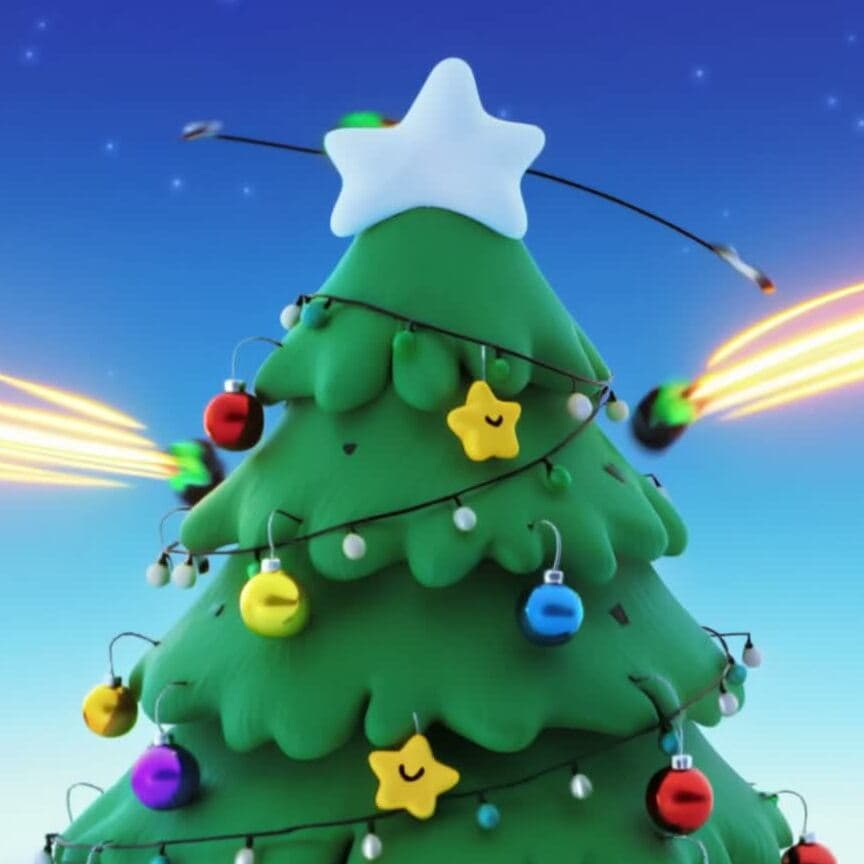





The Christmas tree is the most prominent symbol of the Christmas season. Whether it's a natural pine tree with the fragrant scent of the forest, or an artificial tree reusable every year, the lush green tree decorated with lights, ornaments, and a star on top is an image everyone recognizes. When a Christmas tree is set up in homes, malls, or town squares, it announces that the season of joy has begun.
The tradition of bringing trees indoors for decoration has deeper roots than one might think. It didn't start with Christianity but came from ancient beliefs of Northern Europeans who revered and worshipped nature. Bringing evergreen trees indoors during winter was a reminder that life still exists, even when snow covers everything and nature seems dead.
Origins of the Christmas Tree
Before Christianity spread throughout Europe, ancient Germans and Celts had traditions of bringing pine branches indoors during winter. Especially during the winter solstice (the shortest day of the year, around December 21), these evergreen trees represented strength, eternal life, and hope that spring would return.
Ancient Romans used pine branches to decorate homes during Saturnalia, a festival celebrating the god Saturn in late December. They hung branches above doors as symbols of abundance and good luck. Vikings believed pine trees were special trees of the god Balder, the god of light.
When Christianity spread to Europe, clergy tried to transform pagan traditions to have Christian meaning. The triangular pine tree was reinterpreted to represent the Trinity (Father, Son, and Holy Spirit). The sharp needles likened to Jesus's crown of thorns. The green color represented eternal life He provided.
One legend tells that St. Boniface, an English missionary in the 8th century, cut down a sacred oak tree that pagans used for worship to show that the old gods had no power. From the oak's remains, a pine tree grew. He used this pine to teach about Jesus and said the tree's triangular shape symbolized the Trinity.
🎁 Learn about Christmas presents →
The Modern Christmas Tree
The Christmas tree as we know it today began in Germany in the 16th century. Christian families brought pine trees into homes, decorated with apples, nuts, and paper flowers. Some legends say Martin Luther, leader of the Protestant Reformation, was the first to decorate a Christmas tree with candles. The story goes that one night he walked in the forest, saw stars twinkling through pine branches, went home and tried to recreate that image by attaching candles to the Christmas tree branches.
In the 19th century, Christmas trees weren't popular in England and America. Some English groups viewed it as a pagan tradition unsuitable for Christianity. But when a German princess became Queen Victoria of England, she and her husband Prince Albert brought German traditions with them. In 1848, an image of the British royal family standing around a beautifully decorated Christmas tree was published in newspapers.
This image changed everything. Middle-class families across England and America wanted to emulate royalty. The Christmas tree became a symbol of warm family life, wealth, and good taste. Within a few decades, it became a widespread tradition in the Western world.
In the United States, German immigrants brought the Christmas tree tradition from the 19th century. But it gained widespread popularity in the 1850s-1870s when Christmas trees began appearing in magazine illustrations, advertisements, and literature. Having a Christmas tree at home became part of the American dream.
Key moments:
- Pre-Christian era: Pagans used pine branches in rituals
- 8th century: St. Boniface gave Christian meaning to pines
- 16th century: Germans began bringing pine trees indoors and decorating
- 1848: Royal family image popularized Christmas trees
Decorations and Symbolism
Christmas tree decoration has evolved greatly over the centuries. Initially, people used household items: apples, nuts, bread, and paper flowers as decorations. Each had meaning. Apples represented the forbidden fruit in the Garden of Eden. Nuts represented abundance. Bread represented Christ's body.
Candles were beautiful but dangerous decorations. Many homes burned because of candles on Christmas trees. In 1882, Edward H. Johnson, vice president of Edison Electric Light Company, created the first electric Christmas tree using 80 bulbs. Initially, bulbs were very expensive and had to be manually wired. But as prices dropped, electric lights became standard in the 1920s-1930s.
Glass Christmas ornaments began production in Germany in the 19th century. Glassblowers in Lauscha made blown glass balls coated with silver or gold inside. They were more beautiful than apples and lasted longer. The glass ornament tradition spread throughout Europe. Each region had distinctive styles and colors.
In the 20th century, plastic decorations and new materials made decoration more diverse and affordable. Balls, bells, Santa figures, angels, fake snow, and tinsel became standard decorations. Each family has its own decoration style. Some families prefer bright colors. Some choose classic silver-gold tones. Some families make all decorations by hand.
The star on top of the tree is a decoration with special meaning. It represents the Star of Bethlehem that guided the three wise men to baby Jesus. Some families use an angel instead of a star, representing the angel who announced Jesus's birth. Placing the star or angel on top is often a special ritual where the youngest or oldest family member is honored to do it.
Popular decorations and meanings:
- Star: The Star of Bethlehem that guided wise men to Jesus
- Angel: The angel who announced good news to shepherds
- Balls: Representing fruit from the Garden of Eden, originally apples
- Bells: Calling people to worship, symbol of good news
- Lights: Christ's light, hope in darkness
Real or Artificial Trees
The debate between real and artificial Christmas trees is a topic with many differing opinions. Real tree supporters say the scent of pine, the feel of real needles, and the experience of choosing a tree are essential parts of tradition. They also claim real trees are more environmentally friendly because they're natural and biodegradable.
Artificial tree supporters argue that artificial trees last many years, don't require cutting real trees, don't need cleaning fallen needles, and are more convenient. Modern artificial trees are very realistic. Some have pine scent coated, fake snow on branches, or built-in lights.
The environmental truth is more complex than it seems. Most real Christmas trees are grown on specific tree farms, not cut from natural forests. These trees absorb CO2 while growing and create habitat for wildlife. After use, they can be composted or mulched. But there are impacts from transportation, pesticides, and water usage.
Artificial trees are made from PVC or polyethylene plastic, which comes from oil. The production process uses energy and creates pollution. Most are manufactured in China and transported long distances. Studies find you must use an artificial tree for at least 10-20 years for environmental impact to be lower than buying a real tree every year. But most artificial trees are discarded before then and cannot biodegrade.
A third option is renting a Christmas tree still rooted in a pot. After the season, you return the tree for the company to replant or plant it in your own garden. This method is popular in Europe. But care must be taken because trees brought from cold outdoors into warm homes then back out again may shock and die.
Famous Christmas Trees
Some Christmas trees become famous landmarks and symbols. The Rockefeller Center Christmas tree in New York is one of the most famous in the world. This tradition began in 1931 when Rockefeller Center construction workers pooled money to buy a small Christmas tree for the construction site. In 1933, the first official lighting ceremony occurred. Since then, this tree has become a symbol of New York during Christmas.
This tree stands 22-30 meters tall, decorated with over 50,000 LED lights, and a crystal star on top with a diameter of 2.9 meters, weighing over 400 kilograms, adorned with over 70 kilograms of Swarovski crystals. The lighting of this tree is a major event broadcast live on television, with performances, music, and tens of thousands of people waiting to watch.
The Trafalgar Square Christmas tree in London is a gift from Norway since 1947, thanking Britain for help during World War II. Every year Norway chooses one of the most beautiful Norwegian spruce trees to send. The tree stands about 20-25 meters tall, cut in a special ceremony in forests outside Oslo, then transported by ship across the North Sea to London.
The Christmas tree in Vatican City, Rome, stands in St. Peter's Square. This tree is an important religious symbol. Every year, different countries or regions of Italy take turns donating trees. The tree is blessed by the Pope and decorated with lights and traditional ornaments. Under the tree is often a large Nativity scene with statues of various characters.
The world's tallest Christmas tree on record is in Dortmund, Germany, standing 45 meters tall. But it's not a real tree but a steel structure decorated with over 1,700 real pine branches and over 48,000 lights. The tallest real Christmas trees are usually in America, Canada, or Northern Europe, standing over 60-70 meters.
Famous Christmas trees:
- Rockefeller Center, NYC: Most famous tree, lighting ceremony broadcast live
- Trafalgar Square, London: Gift from Norway every year
- St. Peter's Square, Vatican: Tree blessed by the Pope
- Dortmund, Germany: World's tallest Christmas tree
🎁 See other randomization tools →
Christmas Tree Setup Traditions
Different countries and cultures have specific traditions about when to set up and take down trees. In Germany and many European countries, trees are often set up during Advent (about 4 weeks before Christmas), but some families wait until December 24. In England and America, many set up trees after Thanksgiving (late November), and some as early as early December.
Choosing and cutting a tree is an experience many families consider an annual tradition. They drive to Christmas tree farms, walk to find the perfect tree, cut it themselves or have the farm owner help, then take it home. This process creates memories. Children remember which year the tree was too tall, which year dad cut the wrong side and the tree tilted, which year it snowed and everyone was cold.
Decorating the Christmas tree together is an important family ritual. Some families do it in one night, playing Christmas music, drinking hot cocoa, and each person hanging their favorite ornaments. Ornaments children made at school, ornaments inherited from grandparents, and ornaments bought from travels—each piece has a story. Taking out ornaments every year is talking about memories.
Taking down the tree also has different rules. In some Christian traditions, trees should stay until Epiphany (January 6), which is 12 days after Christmas. Some countries take down on New Year's Day. Some families keep it until needles start drying and falling all over the floor. There's a belief that removing the tree before January 6 brings bad luck. But many people don't care and remove it right after New Year's.
✨ See other randomization methods →
Christmas Trees in Various Cultures
Although Christmas trees have European roots, various cultures worldwide adapt them to their own contexts. In the Philippines, the largest Christian country in Asia, Christmas trees are set up from September (the Philippines starts celebrating Christmas earliest in the world). Since pine trees don't grow in hot humid countries, Filipinos use artificial trees or create trees from local materials like bamboo or recycled plastic bottles.
In Australia and New Zealand, Christmas falls during summer. Having pine trees and fake snow indoors while it's 35-40 degrees outside feels strange. Some families hold Christmas parties at the beach, barbecue, and swim. But they still set up Christmas trees at home following British tradition.
In Japan, although most people aren't Christian, decorating Christmas trees is popular, especially in malls and hotels. Christmas in Japan is a romantic holiday for couples, more than a family holiday. Couples book restaurants, exchange gifts, and view decorations. Christmas trees in public places are beautifully decorated and become photo spots.
In India, which has few Christians (about 2.3% of the population), Christmas trees are rarely seen in ordinary homes. But in major cities and Christian communities like Kerala and Goa states, Christmas tree traditions remain strong. Indians sometimes use mango or banana trees for decoration instead of pines.
In Thailand, Christmas trees are often seen in malls, hotels, and areas with foreigners, more than in homes. Decorating Christmas trees is part of marketing and seasonal atmosphere, more than religious tradition. But in Thai Christian communities, churches and Christian family homes have Christmas trees following tradition.
🎯 See other randomization tools →
Economic and Environmental Impact
The Christmas tree industry is a multi-billion dollar business. In the United States alone, about 25-30 million real Christmas trees are sold per year, and about 21 million artificial trees. Christmas tree farming is an important agricultural industry in some regions, especially Oregon, North Carolina, Michigan, and Pennsylvania.
Christmas tree farms employ tens of thousands of people, from planting, caring, cutting, transporting, and selling. Most Christmas trees take 7-10 years to grow before cutting. During that time they must be trimmed, fertilized, sprayed with pesticides, and maintained. Farmers must plan ahead and invest money and time before getting profit.
Environmental impact is a debated issue. Real Christmas trees grown on farms absorb CO2 while growing, release oxygen, and create temporary habitat for animals and insects. After cutting, the land is immediately replanted. So it's more like annual crop farming than deforestation. But using pesticides, chemical fertilizers, and water has negative impacts.
Artificial trees are made from plastic that cannot biodegrade. Production creates pollution, and transportation from manufacturing countries (mostly China) uses much energy. But if used long enough (more than 10-20 years), total impact may be lower than buying real trees every year. The problem is most people change artificial trees before then because they want new styles or old ones are damaged.
The most sustainable solution might be using local materials, potted trees for reuse, making trees from recycled materials, or even creating trees from books, wood, drawings, or other available materials. Creativity and sustainability can coexist and create special traditions meaningful for families.
Alternative and Creative Christmas Trees
In recent years, there's been a trend of alternative creative and unusual Christmas trees. Some people create trees from old books stacked together. Arranging volumes in triangular shape and decorating with lights. This method suits book lovers and helps recycle unused books. Some people create from wood pallets leaning against walls, painted, and decorated.
Christmas trees from dry branches are a popular idea. Collecting branches from nature, arranging them in tree shape, tying or attaching to supports, and decorating with lightweight ornaments. This method gives a rustic feel and closeness to nature. These ladder-like trees can be easily DIY and have unique character.
Wall-mounted Christmas trees made from branches, lights, or stickers suit people with limited space. People in dorms or small apartments may not have room for regular-sized trees. Drawing or sticking Christmas trees on walls solves this problem. Some use one string of lights arranged in tree shape. Some use post-it notes arranged in tree shape. Some draw with chalk on blackboards.
Upside-down Christmas trees hanging from ceilings are a new trend. This tradition claims roots from Eastern Europe in the Middle Ages. Trees are hung from ceilings with tips pointing down. This method saves floor space, creates uniqueness, and allows more gifts to be placed under the tree. Some malls and luxury hotels use upside-down trees as statement pieces.
Edible Christmas trees made from fruit, bread, cheese, or other foods are fun ideas for parties. Arranging pineapples in tree shape, decorating with grapes, cherry tomatoes, and cheese. Or creating trees from cookies stacked in layers. Children love these trees because they can eat them after viewing.
🎁 See other randomization tools →
Conclusion
The Christmas tree is more than decorative trees. It's a symbol connecting ancient traditions with the present. From pagan beliefs about evergreen trees representing eternal life, through Christian interpretation, to being the center of modern family celebrations, Christmas trees evolve and adapt to cultures while maintaining core meaning.
Setting up and decorating Christmas trees is a ritual creating memories. Sparkling lights in dark nights, ornaments telling family stories, and moments everyone gathers around the tree all have value money can't buy. Whether you choose a real tree with fragrant scent, an artificial tree lasting many years, or a creative alternative tree, what matters is the meaning and tradition it represents.
In a rapidly changing world, Christmas trees remind us of tradition's continuity, family warmth, and hope that light triumphs over darkness. Even though we celebrate differently, use different materials, or have different beliefs, Christmas trees remain universal symbols of happiness, hope, and love during this season.
Ready to randomly select lucky winners or do Christmas activities? Try Christmas Tree Randomizer to add fun to your celebrations. Let the Christmas tree be more than decoration but part of memorable memories.
Interested in other Christmas topics? See Christmas Present Santa Claus Reindeer or other randomization methods