




















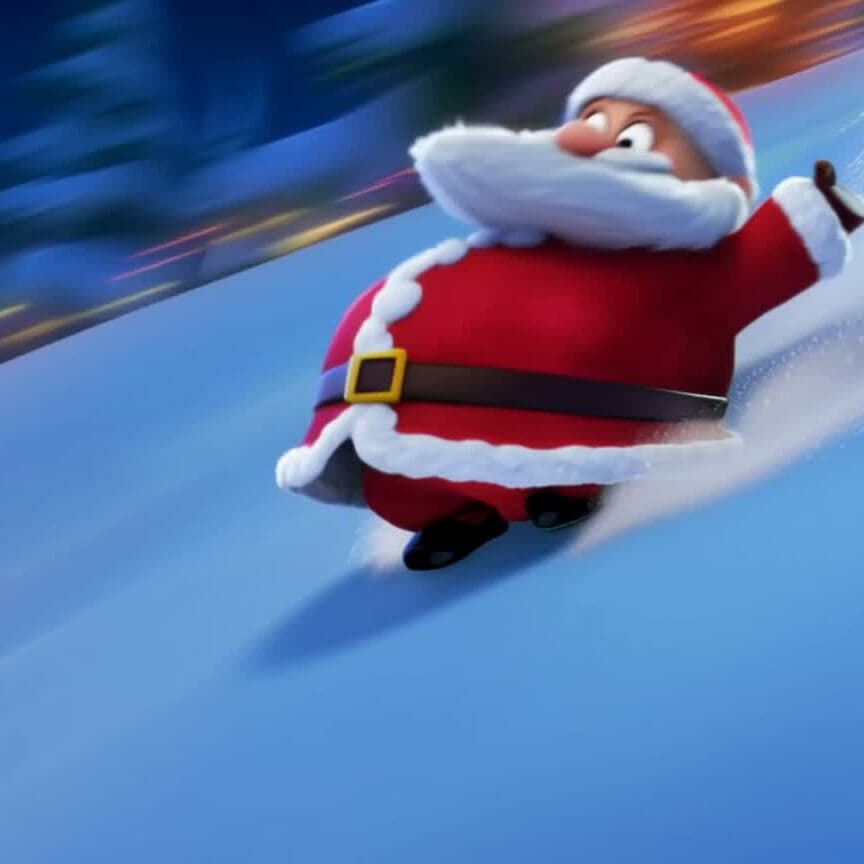




Santa Claus is the character children worldwide await. A jolly fat man in a red suit trimmed with white, long white beard and mustache, riding a sleigh pulled by flying reindeer, descending chimneys to place gifts under Christmas trees on the night of December 24. This image is so deeply embedded in pop culture that millions of children write letters to him, leave milk and cookies, and excitedly await Christmas.
But Santa Claus wasn't born with Christmas. This character evolved over centuries, blending the history of a real saint, European folk legends, and American corporate marketing in the 19th-20th centuries. The journey from Saint Nicholas in the 4th century to modern Santa Claus is an interesting story of cultural transformation.
Saint Nicholas: The Real Person Behind the Legend
Santa Claus has roots in Saint Nicholas, a bishop who actually lived in the 4th century in Myra, now in Turkey. He was born into a wealthy family but became a bishop famous for kindness, especially toward children and the poor. Saint Nicholas died on December 6, 343 AD, and this day became St. Nicholas Day, celebrated in many countries.
The most famous legend about Saint Nicholas tells of a very poor man with three daughters but no money to prepare dowries for them to marry. Without dowries, those daughters might be forced into prostitution. Saint Nicholas heard this story. One night he secretly threw a bag of gold through the window into the house. The bag landed in a stocking hanging by the fireplace to dry. The man found the gold and used it as a dowry for the eldest daughter.
Saint Nicholas returned two more nights, each night throwing bags of gold in, until all three daughters had dowries. On the third night, the man waited and discovered it was Saint Nicholas. He thanked him profusely, but Saint Nicholas asked him to keep it secret. This story became the origin of the tradition of secret gift-giving and hanging stockings by the fireplace.
There are many other legends about Saint Nicholas. He saved sailors from shipwrecks, rescued kidnapped children, and protected people from injustice. With these stories, he became the patron saint of children, sailors, merchants, and the falsely accused. His veneration spread throughout Europe, and many churches were named after him.
🎁 Learn about Christmas presents →
From Sinterklaas to Santa Claus
When Saint Nicholas became revered in Europe, each country developed its own traditions. In the Netherlands, Sinterklaas is an important character who brings gifts to children on December 5. He's a tall thin man wearing a bishop's red robe, bishop's miter, and has an assistant named Zwarte Piet riding a white horse on rooftops.
Sinterklaas comes from Spain by ship, carrying a large book recording every child's behavior. Good children receive gifts and sweets. Naughty children receive birch rods or coal. Or worse, might be put in a sack and taken back to Spain. This tradition teaches children to behave well. Parents use Sinterklaas stories to threaten children into obedience.
When the Dutch migrated to New Amsterdam (later became New York), they brought Sinterklaas traditions with them. English-speaking Americans mispronounced "Sinterklaas" as "Santa Claus," and traditions gradually changed over time. The gift-giving day changed from December 5 to Christmas Day, and the character blended with other traditions.
In 1809, Washington Irving, an American writer, wrote a satirical book about New York history. In it he described St. Nicholas as a jolly fat man flying in the sky in a wagon and throwing gifts down chimneys. This was the first time this image appeared in American literature. Although originally humorous, it became deeply embedded in imagination.
Name evolution:
- Greek: Nikolaos (victory of the people)
- Netherlands: Sinterklaas
- English: Saint Nicholas, Saint Nick
- American: Santa Claus
🎄 Read about Christmas trees →
"A Visit from St. Nicholas" Poem and Modern Image
In 1823, the most famous Christmas poem was published in a newspaper. "A Visit from St. Nicholas," known as "'Twas the Night Before Christmas," written by Clement Clarke Moore (though authorship is debated), created the Santa Claus image we know today.
The poem describes Santa as "a jolly elf fat and round" with a round belly and red cheeks, laughing loudly, riding a sleigh pulled by eight reindeer (the poem first mentioned reindeer and named them: Dasher, Dancer, Prancer, Vixen, Comet, Cupid, Donner, and Blitzen), smoking a pipe, carrying a sack full of toys, and descending chimneys to fill hung stockings.
This poem was reprinted every year, becoming one of the most read poems in English. It defined American Christmas traditions. Children hung stockings by fireplaces, waited for Santa to descend from chimneys, and got excited about reindeer hooves on rooftops. The image from this poem spread through Christmas cards, books, and illustrations.
In 1863, Thomas Nast, a famous cartoonist, drew Santa Claus in Harper's Weekly magazine. He continued drawing for 30 years, creating a clearer image. Nast created the image of Santa's workshop at the North Pole, elves making toys, and the big book recording good and naughty children's names.
In 1931, Coca-Cola hired artist Haddon Sundblom to draw Santa Claus for advertising campaigns. Sundblom created the warmest, friendliest, jolliest, and most lovable Santa image ever. His Santa wore a bright red suit trimmed with white fur, had a round belly, rosy red cheeks, wide smile, and twinkling eyes. This image was used in Coca-Cola advertisements for over 30 years and became the standard Santa Claus image worldwide.
Santa image creators:
- Clement Moore (1823): Defined personality and reindeer
- Thomas Nast (1863-1886): Created North Pole workshop image
- Haddon Sundblom (1931-1964): Most classic Santa image
Santa's Home
According to legend, Santa Claus lives at the North Pole. Although the poem "'Twas the Night Before Christmas" didn't specify precisely, Thomas Nast designated it as the North Pole in his drawings. There Santa has a large workshop where elves work making toys all year, reindeer stables, and rooms storing letters from children worldwide.
However, many countries claim Santa lives with them. Finland claims Santa lives at Korvatunturi, a mountain in Lapland. He lives in a secret cave shaped like rabbit ears (korva means ear) to hear children worldwide. Finland has Santa's official office in Rovaniemi, Lapland's capital. There's a Santa Claus park, Santa's post office, and the Arctic Circle line where tourists take photos.
Greenland claims Santa really lives with them, since Greenland is the largest inhabited land near the North Pole. They built Santa's house in Uummannaq town. They have Santa's post office answering letters in various languages and promote tourism with Santa Claus themes.
Sweden says Santa (or Jultomten) lives in Mora town in Dalarna region. Canada claims the geographic North Pole is in their waters and has a special postal code for Santa Claus: H0H 0H0 (mimicking Santa's laugh "Ho Ho Ho"). Canada Post answers children's letters sent to this code every year.
In the United States, several cities use Christmas themes, such as North Pole, Alaska and Santa Claus, Indiana. They have amusement parks, souvenir shops, and post offices that stamp special marks on Christmas cards people send. This competition claiming Santa lives with them has become part of local tourism and economy.
Santa Claus in Various Cultures
Although Santa Claus has European and American roots, his image has spread worldwide, with each culture adapting to its own context. In France, Père Noël (Father Christmas) resembles American Santa Claus. But sometimes wears long robes instead of short coats. He comes on the night of December 24 and places gifts under Christmas trees or in shoes children leave by fireplaces.
In England, Father Christmas was a character that existed before American Santa Claus. He represented the spirit of Christmas celebration, generosity, and fun. In the past he wore green or brown robes, but today his image has blended with Santa Claus until almost indistinguishable.
In Germany, Weihnachtsmann (Christmas Man) resembles Santa Claus. But in some regions, Christkind (Christ Child), an angel girl in white with wings and golden crown, brings gifts. Christkind came from Protestant tradition that Martin Luther created to replace Catholic Saint Nicholas. But both coexist in modern German culture.
In Italy, Babbo Natale resembles Santa Claus but has a smaller role than La Befana, a kind witch who brings gifts on January 6. In Spain and Latin America, Los Reyes Magos (the three wise men) bring gifts on January 6 as well. But Santa Claus is gaining popularity from American influence.
In Russia, Ded Moroz (Grandfather Frost) wears long blue or red robes, carries a staff, and comes with Snegurochka (Snow Maiden), his granddaughter. Ded Moroz brings gifts on New Year's rather than Christmas, since Russia uses the Julian calendar and celebrates Christmas on January 7.
In Japan, Santa Claus (サンタクロース) is known, although most Japanese aren't Christian. Japanese children receive gifts from parents but are told they come from Santa. In South Korea, Santa Claus is called Santa Harabeoji (Grandfather Santa) and is popular among Christians, about 30% of the population.
✨ See other randomization methods →
Tracking Santa and Modern Technology
In 1955, a Sears store in Colorado Springs published an ad for children to call Santa. But they printed the wrong phone number. The number printed was for CONAD (Continental Air Defense Command), a military air defense unit. Colonel Harry Shoup received calls from children asking where Santa was. Instead of refusing, he ordered soldiers to check radar and report Santa's position to children.
This event became an annual tradition. When CONAD became NORAD (North American Aerospace Defense Command), they continued tracking "Santa." Today, NORAD Tracks Santa is a website children worldwide visit on the night of December 24. The website shows a real-time map of where Santa is, how many gifts he's delivered, and when he'll arrive at your city.
Google created its own Santa Tracker in 2004, a website and app with games, activities, videos, and Santa tracking on Christmas Eve. Microsoft, Amazon, and other tech companies have their own Santa Trackers. These apps use AR (Augmented Reality) technology to let children see Santa in their own rooms, take photos with him, and interact.
Santa's presence on social media has also increased. There are several official Santa Claus accounts on Facebook, Instagram, TikTok, and Twitter posting stories from the North Pole workshop, pictures of elves working, and videos of Santa preparing to deliver gifts. Children can message Santa, share wish lists, and receive replies.
Video calls with Santa are also popular services. Parents hire people dressed as Santa to video call with children. Santa calls children's names, knows how they've been good, and talks about wishes. These services make Santa feel more real in the digital age.
🎯 See other randomization tools →
Psychology of Believing in Santa Claus
Many parents debate whether children should believe in Santa. Supporters say it creates magic and imagination for children. Teaches hope and excitement. And is part of harmless childhood fun. Believing in supernatural things is part of intellectual development. Children with high imagination often have better creativity and problem-solving.
Opponents worry that lying to children damages trust. When children learn the truth, they may feel deceived and disappointed. Some research finds children who learn the truth about Santa feel disappointed, angry at parents, and wonder what else parents said is false. However, most studies find children aren't hurt by learning the truth and still have good relationships with parents.
Learning the truth usually happens gradually. Children start doubting from ages 5-6, when seeing multiple Santas in different malls, or noticing their own chimney is too small, or friends at school saying Santa isn't real. Most children know the full truth by ages 7-8. But some pretend to still believe so parents won't be sad or to still get gifts.
Interestingly, most children don't feel very angry or betrayed. They understand Santa is part of play and tradition. Some feel proud they're old enough to know the truth. Some still enjoy traditions and participate in creating magic for younger siblings. Transitioning from believer to knower helping create magic is part of growing up in Christmas culture.
Psychological effects:
- Imagination: Creates creativity and magic
- Behavior: Teaches good behavior gets rewards
- Bonding: Creates shared family experiences
- Growth: Learning truth is part of growing up
Santa Claus and Consumerism
Santa Claus has become a symbol of Christmas consumerism. His image is used to advertise all types of products, from beverages, toys, clothing, to cars and electronics. Malls hire people dressed as Santa to sit for children to sit on laps and take photos, while receiving wish lists full of toys and products sold in the mall.
Marketing uses Santa to create desire in children. Children write letters asking for expensive things because they believe Santa gives them free. Parents feel pressured to buy what children ask because they don't want to disappoint them. Some families spend too much during Christmas, creating debt that takes months to pay off.
Using Santa for advertising has some benefits. It creates an atmosphere of happiness and hope. Children get excited about this season. Families spend time together choosing gifts, viewing beautifully decorated store windows, and making shared memories. Many businesses rely on Christmas sales for annual profit, and temporary employment helps many people.
Criticism of Santa as a symbol of capitalism is increasing. Critics say Santa is used to teach children to be good consumers, believe happiness comes from receiving new things, and chase endless material goods. Some families try to reduce gift importance, emphasize spending time together, traditions, and giving to those in need instead.
🎁 See other randomization tools →
Santa in Movies and Pop Culture
Santa Claus appears in hundreds of movies. Some portray him as traditionally kind characters. Some question his existence. And some create strange new stories. "Miracle on 34th Street" (1947) is a classic film telling the story of a man claiming to be the real Santa. The film questions how believing in the unseen has value.
"The Santa Clause" (1994) tells the story of a man who accidentally becomes Santa. This film creates rules and logic behind how Santa works. "Elf" (2003) tells the story of a human raised in the North Pole workshop. It's a cute comedy that became a new classic. "Klaus" (2019) is an animated film telling Santa's origin in a new beautiful and touching perspective.
Strange Santas also appear in movies. "Bad Santa" (2003) is an adult comedy about a poorly behaved mall Santa. "The Nightmare Before Christmas" (1993) has Santa Claus kidnapped by Jack Skellington from Halloween Town. These films question and parody traditional Santa images.
In TV series, Santa appears in countless Christmas specials. From "The Simpsons," "South Park," to "Doctor Who" and "The Office." Each uses Santa in different ways. Some celebrate magic. Some criticize consumerism. Some create new fantasy stories.
Popular Santa Claus movies:
- Miracle on 34th Street: Classic about belief
- The Santa Clause: Family comedy about becoming Santa
- Elf: Cute comedy about an elf in New York
- Klaus: Beautiful animated Santa origin story
🎄 See other randomization tools →
Conclusion
Santa Claus is one of the most complex characters in modern culture. He started from a real saint in the 4th century who was merciful to the poor. Through transformation by European folk legends, American literature, cartoon art, and marketing by large corporations, he became the image we know today.
The jolly fat man in a red suit riding a sleigh pulled by flying reindeer, descending chimneys to place gifts, and laughing "Ho Ho Ho" is an image deeply embedded in people's minds worldwide. Even though children eventually learn the truth, memories of believing in Santa, writing letters to him, leaving milk and cookies, and Christmas morning excitement remain throughout life.
Santa Claus means different things to different people. For children, he's magic and hope. For parents, he's a tool to teach good behavior and create happiness for children. For businesses, he's a symbol of shopping season. For critics, he's a representative of capitalism. But for many, he's part of tradition connecting them to childhood, family, and simple happiness.
Ready to randomly select lucky winners like Santa chooses good children? Try Santa Claus Randomizer to add fun and magic to your Christmas activities. Let everyone experience the excitement of waiting for Santa to deliver gifts.
Interested in other Christmas topics? See Christmas Present Christmas Tree Reindeer or other randomization methods