














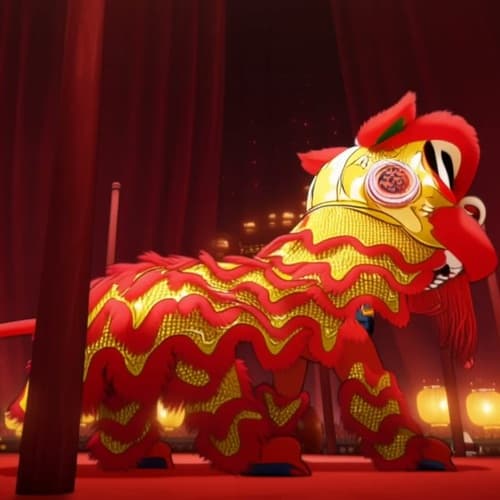







The thunderous crash of drums and cymbals announces their arrival before you see them—two performers moving as one beneath a vibrant lion costume, leaping, crouching, shaking their magnificent head in movements both fierce and playful. The lion dance ranks among the most iconic and spectacular Chinese New Year traditions, transforming streets into stages for acrobatic performances that blend martial arts, dance, music, and ancient spiritual beliefs into unforgettable spectacle.
More than entertainment, lion dances serve ritual purposes deeply rooted in Chinese cosmology. The performance awakens good fortune, drives away evil spirits, and blesses businesses and households for the coming year. The lion—a creature never native to China yet embraced as a symbol of power, protection, and prosperity—becomes a conduit for blessings when brought to life through skilled performance. This tradition has survived millennia because it satisfies human needs for spectacle, community celebration, and tangible expressions of intangible hopes.
Ancient Origins and Mythological Foundations
Lion dance origins remain debated among historians, with evidence pointing to multiple cultural influences converging during China's Han Dynasty (206 BCE - 220 CE). Lions themselves came to China via the Silk Road from Central Asia and India, where Buddhist traditions already venerated lions as symbols of Buddha's royal heritage and spiritual power. Chinese emperors received lions as exotic tribute gifts, and these majestic creatures captured cultural imagination despite never inhabiting China naturally.
Early lion dances likely emerged as imperial court entertainment during the Tang Dynasty (618-907 CE), when exotic performances featuring foreign animals and acrobatics entertained nobility. These court performances gradually spread to folk celebrations, transforming from elite entertainment into community ritual. The dance evolved distinctly from imported traditions, developing unique Chinese characteristics through centuries of cultural adaptation.
Historical Development Stages:
- Han Dynasty (206 BCE-220 CE): Lions arrive in China via Silk Road trade
- Tang Dynasty (618-907 CE): Court performances featuring lion-inspired dances
- Song Dynasty (960-1279 CE): Folk adoption transforms elite into popular tradition
- Ming/Qing Dynasties: Regional styles develop distinct characteristics and meanings
- Modern era: Global spread through Chinese diaspora worldwide
The most famous origin legend involves the Nian monster, a fearsome beast that terrorized villages on New Year's Eve, devouring crops, livestock, and even people. Villagers discovered Nian feared loud noises, bright lights, and the color red. They used firecrackers, lanterns, and red decorations to drive the monster away. Some versions claim a lion descended from heaven to battle Nian, protecting humanity. The lion dance reenacts this mythological victory, with performers symbolically driving away evil forces threatening the new year.
Another legend tells of a magical lion in the Guangdong region that appeared during famine to bring prosperity. When it died, people created lion dances to summon its spirit annually, hoping to attract the fortune it represented. Whether historical or legendary, these narratives explain why lion dances became inseparable from Chinese New Year celebrations—they literally perform the expulsion of bad fortune and invitation of good.
Northern Versus Southern Lion Styles
Chinese lion dance developed into two distinct regional styles with different aesthetics, performance techniques, and symbolic meanings. Northern and Southern lions are as different as ballet and breakdancing, sharing basic concept while diverging dramatically in execution.
Northern lions, associated with Beijing and northern China, more closely resemble actual lions with shaggy yellow or orange fur, shorter bodies, and realistic proportions. These lions appear in pairs—male and female, distinguished by decorative elements. Northern performances emphasize acrobatic feats, comic playfulness, and interaction with a character called the "laughing Buddha" or "big head Buddha" who leads and plays with the lion using a large fan.
Northern Lion Characteristics:
- Realistic appearance: Resembles actual lion anatomy and proportions closely
- Pair performances: Male and female lions perform together creating narrative
- Playful personality: Emphasizes cute, friendly, entertaining movements over fierceness
- Acrobatic focus: Jumping on balls, rolling, standing on hind legs
- Buddha character: Interacts with lions adding comedic storytelling elements
- Colorful variety: Yellow, orange, red lions represent different characteristics
Southern lions from Guangdong province contrast sharply. These lions feature large expressive heads with exaggerated features—bulging eyes, horns, and mirror on forehead to reflect evil back at demons. The costume uses vibrant colors with symbolic meanings: red for courage, gold for majesty, black for young lions. Southern lions emphasize powerful, athletic movements with strong martial arts influence.
The Southern style splits into multiple sub-styles including Fut San (Buddha Mountain), Hok San (Crane Mountain), and others. Fut San lions dominate internationally, recognized by their striped horn-like protrusions. These lions perform to vigorous drumming, executing powerful stances, dramatic head movements, and dangerous-looking acrobatics that demonstrate performers' martial arts mastery.
Southern Lion Characteristics:
- Stylized appearance: Exaggerated features, elaborate decorations, symbolic elements
- Single lion focus: Usually one lion per team performing independently
- Fierce personality: Combines power with grace, martial arts with dance
- Pole work: Climbs poles, balances on narrow platforms, dramatic heights
- Lettuce eating: Ritual "choi ching" eating and spitting out lettuce
- Regional variations: Different lineages maintain distinct movement vocabularies
The Southern style's association with kung fu schools cannot be overstated. Many martial arts schools maintain lion dance troupes, and training in both disciplines simultaneously remains common. The physical demands align perfectly—strength, flexibility, coordination, partner synchronization, and explosive power necessary for martial arts translate directly to lion dance performance. This connection makes Southern lion dance simultaneously cultural tradition and martial arts demonstration.
🎪 Explore Performance Traditions →
The Lion Head and Costume Construction
Crafting a traditional lion head requires specialized skill passed down through generations of artisans. The head forms the lion's personality, with every detail carrying symbolic meaning and performance function. Traditional construction uses bamboo frames covered with paper, cloth, and elaborate decorations including mirrors, pom-poms, ribbons, and gilded ornaments.
The mouth must open and close smoothly, controlled by the head performer pulling strings or levers. Eyelids blink through similar mechanisms, allowing the lion to "see" or "sleep." Ears rotate and wiggle. The horn (for Southern lions) adds to the imposing appearance. Every moving part contributes to the illusion of living creature responding to its environment.
Lion Head Components:
- Bamboo frame: Lightweight structure supporting entire head assembly
- Mirror forehead: Reflects evil spirits back, protects from malevolent forces
- Moveable features: Blinking eyes, opening mouth, wiggling ears add realism
- Horn decorations: Symbolic protrusions marking powerful protective spirits
- Fur or fabric covering: Creates lion's "skin" and defines color symbolism
- Internal grips: Handles allowing head performer precise control and manipulation
The body consists of fabric attached to the head, under which two performers operate. Traditional costumes use durable fabrics decorated with sequins, embroidery, and tassels that shimmer during movement. The rear performer can't see outside the costume, relying entirely on the head performer's guidance through subtle signals—taps, position shifts, and rehearsed sequences enabling synchronized movement despite blindness.
Modern materials have transformed construction while maintaining traditional aesthetics. Fiberglass and lightweight metals replace bamboo, creating more durable heads. LED lights inside the head make eyes glow dramatically during evening performances. Synthetic materials allow elaborate decorations that withstand repeated performance better than delicate traditional components. However, purists argue these modern innovations sacrifice spiritual authenticity for convenience.
Color selection carries deep symbolic meaning. Red lions represent courage, energy, and luck—most popular for general celebrations. Gold lions symbolize majesty and treasure, often used for grand openings or important business events. Black lions are young, learning lions in training. Green lions represent growth and harmony. White lions are rare, associated with mourning and generally avoided except in specific contexts. Choosing appropriate color demonstrates cultural understanding.
The cost of quality lion costumes ranges dramatically. Basic beginner sets might cost a few hundred dollars. Professional competition-grade costumes with intricate decorations, premium materials, and superior craftsmanship can exceed several thousand dollars. Schools and organizations often own multiple lions allowing variety and rotation to prevent wear.
🎨 Learn About Cultural Symbolism →
Music, Rhythm, and the Percussion Orchestra
Lion dance without music is merely acrobatics in costume. The driving percussion orchestra transforms movement into ritual, creating the soundscape that animates the lion's spirit. The ensemble typically includes large drums, cymbals, and gongs, with each instrument contributing distinct voice to the thunderous conversation between musicians and performers.
The drum serves as heartbeat and command center. The lead drummer controls tempo, signals transitions, and communicates with performers through specific rhythmic patterns. Different drum patterns indicate different movements—slow stalking, playful frolicking, sleeping, waking, attacking, celebrating. Skilled performers respond instantaneously to drum commands, their movements synchronized perfectly with percussion.
Traditional Lion Dance Instruments:
- Big drum (da gu): Primary timekeeper and command instrument for whole ensemble
- Cymbals (bo): Crash on beats creating sharp metallic accents
- Gong (luo): Deep resonance marking important moments and transitions
- Small drum (tanggu): Secondary rhythm providing complementary patterns
- Firecrackers: Traditional accompaniment at climactic moments (where legal)
Cymbal players crash their instruments in patterns coordinating with drum, creating layered rhythmic complexity. The precise timing between drum strikes and cymbal crashes determines the music's tightness and impact. Gongs punctuate significant moments—the lion waking, completing a difficult trick, or consuming the ceremonial lettuce. These instruments combine into walls of sound impossible to ignore, announcing the performance to entire neighborhoods.
Learning the music requires years of practice similar to the dance itself. Drummers must develop powerful strikes maintaining consistency across extended performances while reading performers' needs and adjusting tempo seamlessly. The best drummer-performer relationships approach telepathy, with subtle musical hints communicating intentions and responses flowing naturally without conscious thought.
Regional musical styles vary significantly. Southern lion music tends toward more aggressive, driving rhythms reflecting the martial arts influence. Northern music incorporates more variation and playfulness matching those lions' personalities. Competition performances feature original compositions demonstrating creativity while maintaining traditional elements judges expect.
Modern fusion approaches incorporate contemporary music into lion dance. Some performances blend traditional percussion with electronic music, hip-hop beats, or orchestral arrangements. These innovations attract younger audiences and demonstrate the tradition's continued evolution. However, purists argue that abandoning traditional music severs the spiritual and cultural connections making lion dance meaningful beyond mere entertainment.
🥁 Explore Rhythmic Traditions →
The Lettuce Eating Ceremony (Choi Ching)
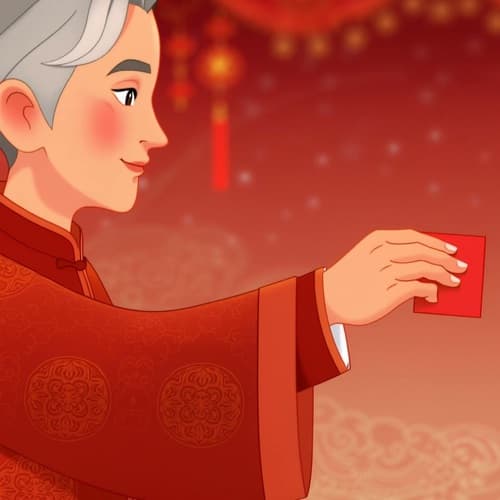
The most symbolically charged moment in Southern lion dance is "choi ching"—the lettuce eating ceremony. Businesses and households place lettuce (or other vegetables) with red envelopes containing money at elevated locations. The lion must retrieve and consume the offering, performing the "spitting out" of lettuce pieces blessing the location with good fortune.
The Chinese word for lettuce, "sang choy," sounds similar to words meaning "growing wealth" or "rising fortune." The green vegetable represents vitality and growth. The red envelope contains the host's payment and blessing for the performers. By eating the lettuce and spitting it out, the lion symbolically takes in the old year's negativity and distributes fresh fortune for the new year.
Choi Ching Ritual Elements:
- Elevated placement: Tests performers' skill and lion's "hunting" ability
- Lettuce symbolism: Green growth and the words' lucky phonetic similarities
- Red envelope: Payment for performers plus luck transferred through ritual
- Eating and spitting: Taking in negativity, redistributing as positive energy
- Blessing gesture: Spitting toward entrance ensures fortune enters business
- Orange sometimes: Alternative to lettuce with "gold" symbolism in certain regions
Retrieval difficulty varies based on placement. Simple versions place lettuce at shoulder height for basic performances. Complex arrangements hang lettuce from high poles, place it on narrow platforms, or create obstacle courses requiring spectacular acrobatics to reach. Competition performances feature nearly impossible placements testing elite performers' absolute limits.
The "spitting" must be done with specific etiquette. The lion carefully shreds the lettuce with its mouth, then dramatically sprays the pieces outward—but never directly at people, which would be disrespectful. Skilled performers aim pieces toward doorways, spreading them to "share" the blessing widely. The host gathers the lettuce pieces afterward, as they're now imbued with fortune.
Modern variations include placing oranges, pomelos, or even durian in some Southeast Asian contexts. Some performances feature elaborate "greens" displays with multiple vegetables arranged artistically, requiring sequential retrieval. Corporate events might use company products instead of traditional items, adapting ritual to contemporary contexts while maintaining symbolic function.
The monetary red envelope represents fair exchange—the host pays for the blessing service while the lion brings good fortune. Amounts vary widely based on location, event importance, and performers' reputation. Residential homes might give modest amounts. Major businesses might provide substantial envelopes, especially for renowned performance teams. This economic dimension makes lion dance viable as semi-professional activity for many troupes.
Pole Dancing and Acrobatic Feats
Southern lion dance's most breathtaking moments occur during pole work, where performers balance on narrow platforms elevated on tall poles. These death-defying acrobatics transform lion dance from cultural performance into extreme sport, requiring years of training and absolute trust between partners.
Traditional pole arrangements vary from simple single poles to complex configurations. Classic setups include seven, nine, or eleven poles arranged in patterns with different heights—some low enough to step onto, others requiring leaps of six feet or more. Poles might be stable or intentionally wobbly, adding danger and difficulty. The lion must navigate across this precarious landscape while maintaining character and performing choreographed movements.
Pole Work Techniques:
- Single pole balance: Standing on one pole with both performers stacked vertically
- Pole jumping: Leaping between platforms requiring explosive power and timing
- Head stands: Front performer balances inverted while rear lifts the tail high
- Split techniques: Performers separate across poles requiring independent balance
- Sleeping lion: Resting pose on poles demonstrating confidence and control
- Ascending sequences: Climbing progressively higher showing lion's courage
The front performer bears tremendous responsibility during pole work. They judge distances, timing jumps, and maintaining balance while completely responsible for the rear performer's safety. The rear performer cannot see, must trust absolutely, and provides crucial ballast and power through coordinated movements. A single miscalculation could result in serious falls.
Competition judges score pole work heavily, as it demonstrates the highest technical difficulty. Performers who execute complex pole sequences smoothly while maintaining the lion's character earn top marks. Innovation matters too—teams create original sequences distinguishing themselves from competitors while respecting tradition.
Safety concerns led to improved training methods and equipment. Crash mats surround performance areas. Performers train progressively, mastering low-level techniques before attempting greater heights. Some schools use harnesses during initial learning, though performance never allows such assistance. Despite precautions, injuries occur, making lion dance among the more dangerous traditional performance arts.
The spiritual dimension of pole work shouldn't be ignored. The elevated performance represents transcendence—the lion rises above earthly concerns, demonstrates mastery over physical limitations, and shows courage confronting danger. Audiences understand instinctively that witnessing someone risk themselves for beauty and tradition creates profound meaning beyond entertainment.
⚖️ Learn About Risk and Randomness →
Regional Variations and International Styles
As Chinese communities spread globally, lion dance followed, developing regional characteristics influenced by local cultures while maintaining core traditions. Southeast Asia, North America, Europe, and Australia each host vibrant lion dance communities with unique flavors.
Malaysia and Singapore developed particularly strong lion dance cultures due to large Chinese populations. Malaysian lion dance competitions rank among the world's most prestigious, attracting teams globally. The Malaysian style emphasizes extremely high poles—some reaching three or four stories—creating spectacular danger. Malaysian teams pioneered many modern innovations in choreography and technique.
Southeast Asian Lion Dance Characteristics:
- Malaysian extreme heights: Pole configurations reaching dangerous elevations
- Singapore precision: Emphasis on clean execution and synchronized perfection
- Thai integration: Buddhist elements sometimes incorporated into performances
- Indonesian adaptations: Local music influences blending with Chinese percussion
- Vietnamese lion dance: Distinct local traditions influenced by but separate from Chinese
North American lion dance reflects diaspora communities maintaining cultural identity. Teams in San Francisco, New York, Vancouver, and Los Angeles maintain high standards, with some performers traveling from Asia to compete or teach. American lion dance sometimes incorporates hip-hop influences, contemporary music, and modern athletic training methods while respecting traditional elements.
European lion dance communities remain smaller but dedicated. Chinese New Year celebrations in London, Paris, Amsterdam, and other cities feature lion dance performances drawing enthusiastic crowds. European teams often struggle accessing traditional training and equipment, creating innovation born of necessity rather than choice.
Australian lion dance benefits from proximity to Asia and significant Chinese-Australian populations. Melbourne and Sydney host active communities with regular performances and competitions. Australian teams often travel to compete in Malaysia and Singapore, bringing back techniques and standards that elevate local performance levels.
Competition culture transformed lion dance significantly. Formal competitions with standardized judging criteria emerged in the twentieth century, creating sport alongside ritual. Teams train year-round for major competitions, developing original routines, complex pole configurations, and innovative choreography. This competitive dimension adds prestige and drives technical advancement while some worry it emphasizes athleticism over spiritual meaning.
Training, Discipline, and Martial Arts Connection
Learning lion dance traditionally occurs through kung fu schools where martial arts and cultural performance intertwine inseparably. Students begin with fundamental stances, strength training, and basic movements before touching a lion costume. This foundation ensures physical preparedness and instills discipline necessary for serious training.
Basic stance work develops leg strength essential for low positions the lion assumes. Horse stance, bow stance, cat stance—all martial arts fundamentals—translate directly to lion dance movements. Hours spent in these positions build the endurance required for performances lasting thirty minutes or longer under heavy costume in hot weather.
Lion Dance Training Progression:
- Foundation building: Martial arts stances, strength, flexibility for months
- Basic movements: Learning to walk, turn, crouch as coordinated unit
- Head control mastery: Manipulating features creating expressive character
- Partner synchronization: Developing telepathic connection with training partner
- Acrobatic techniques: Jumps, balances, and dynamic movements safely
- Pole work introduction: Low heights initially, progressing gradually upward
- Performance polish: Character development, audience interaction, showmanship
Partner selection and trust building form crucial training elements. The ideal lion pairing features complementary skills—one partner may excel at balance and control, another at power and jumping. Height differences affect dynamics; some teams prefer similar heights, others use height contrast strategically. Partners spend hundreds of hours together under the costume, developing intuitive communication replacing verbal instruction.
The head performer's role demands particular skill. They control all facial features, judge distances and obstacles, navigate the path, signal the tail performer, and maintain character throughout. Head performers need strong arms to hold the head aloft, quick reflexes to respond to music changes, and creative instincts to improvise entertaining moments.
Tail performers provide power, balance, and support. Though unable to see, they must anticipate movements, provide lift during jumps, counterbalance during pole work, and maintain height and position perfectly. Great tail performers make head performers look good by providing stable foundations allowing bold movements.
Physical demands rival elite athletics. Performers need explosive power for jumps, endurance for sustained performances, flexibility for various positions, and strength to support a partner's weight on precarious perches. Training regimens include cardio conditioning, weight training, plyometrics, and specific lion dance drills. Elite performers maintain athlete-level fitness year-round.
💪 Learn About Skill Development →
Business Blessings and Commercial Performance
Lion dance serves essential commercial functions beyond cultural celebration. Businesses across Asia and in Chinese communities worldwide hire lion dance troupes to bless grand openings, business relocations, New Year celebrations, and important events. These performances bring good fortune while creating spectacle attracting customer attention.
Grand opening performances follow specific ritual patterns. The lion arrives with percussion creating announcement impossible to miss. The performance outside draws crowds—excellent marketing for the new business. The lion approaches the entrance, performs impressive movements demonstrating vigor and fortune. Finally, the lettuce eating ceremony at the doorway specifically blesses the threshold through which customers will enter.
Commercial Lion Dance Services:
- Grand openings: Bless new businesses ensuring prosperous start
- Ribbon cuttings: Ceremonial role in official opening celebrations
- New Year blessings: Annual visits renewing fortune for established businesses
- Corporate events: Entertainment plus cultural authenticity for diverse gatherings
- Shopping centers: Roaming performances during holiday seasons attracting shoppers
- Residential blessings: Visiting homes to bring fortune to families
Payment for commercial performances varies widely. Small local troupes might perform for a few hundred dollars plus the traditional red envelope. Elite professional teams command thousands for major corporate events. Pricing considers performance length, complexity, number of lions, travel distance, and event prestige. New Year season sees highest demand and prices.
The business model allows some performers to work semi-professionally or professionally. School-based teams use performance income to fund equipment, training, and competition travel. Professional troupes treat lion dance as legitimate career, training full-time and performing regularly. This economic viability ensures tradition's continuity by rewarding excellence and dedication.
However, commercialization concerns arise. When lion dance becomes pure business transaction, does spiritual significance diminish? Do performers going through motions mechanically for money undermine the ritual blessing? These tensions between authentic tradition and commercial necessity challenge modern practice. Most practitioners navigate by maintaining sincere respect for tradition while acknowledging economic realities.
Corporate clients sometimes request modifications challenging traditional practice. Performing indoors limits acrobatics. Time constraints pressure abbreviated ceremonies. Modern business aesthetics might clash with traditional costume designs. Professional troupes must balance respecting tradition with satisfying clients whose payments sustain the practice.
💼 Learn About Cultural Commerce →
Lion Dance Competitions and Judging Standards
Formalized competitions transformed lion dance from purely ritualistic performance into competitive sport with standardized criteria, international rankings, and championship titles. Major competitions in Malaysia, Singapore, Hong Kong, and elsewhere attract teams globally, with substantial prize money and prestigious recognition at stake.
Competition formats typically include multiple components. Compulsory routines test fundamental techniques with standardized sequences every team must perform. Free routines allow creativity and innovation, with teams developing original choreography showcasing unique strengths. Pole work sections specifically evaluate acrobatic skill on elevated platforms. Each component receives separate scoring from multiple judges.
Competition Judging Criteria:
- Technical execution: Clean movements, proper form, synchronized coordination
- Difficulty level: Complexity of choreography and acrobatic elements attempted
- Artistic expression: Character development, creativity, storytelling quality
- Musical synchronization: Precise coordination with percussion orchestra
- Pole work mastery: Height, difficulty, and smoothness of elevated performances
- Overall impression: Judges' holistic assessment of entire performance
Deductions occur for various faults—loss of balance, coordination errors, costume malfunctions, falling off poles, dropping props, or failing elements. Serious errors like performers becoming visible beneath costume or falling from heights result in major point losses. Teams practice thousands of times attempting error-free competition runs under pressure.
Innovation drives competitive lion dance evolution. Teams develop signature moves distinguishing themselves—unique pole configurations, novel choreographic sequences, creative lettuce retrieval methods. Judges reward originality while ensuring innovation doesn't disrespect tradition. Balancing creativity with cultural authenticity challenges choreographers.
Competition culture creates hierarchies and prestigious titles. Championship teams gain recognition leading to performance opportunities, sponsorships, and enhanced reputation. Successful teams attract talented performers creating virtuous cycles of improvement. However, smaller teams without resources to compete at elite levels might feel excluded from the community's highest honors.
Some critics argue competition distorts lion dance's essential meaning. Training solely for scores and trophies might emphasize athletic prowess over spiritual significance. The standardization required for fair judging might reduce regional diversity and creative interpretation. These concerns prompt ongoing debates within the lion dance community about balancing tradition, innovation, competition, and meaning.
🏆 Explore Competition Concepts →
Spiritual Beliefs and Supernatural Functions
Beyond athletic and artistic dimensions, lion dance retains genuine spiritual significance for many practitioners and believers. The performance isn't merely symbolic reenactment—it actively manipulates spiritual forces, drives away malevolent entities, and invites beneficial energies into blessed spaces.
Traditional belief holds that the lion costume becomes animated by spiritual energy during performance. Through the combination of skilled human movement, driving percussion, and sincere intention, the inanimate costume transforms into a vessel for protective spiritual forces. This belief explains the reverence with which many troupes treat their lion costumes, storing them respectfully and sometimes performing rituals before and after use.
Spiritual Functions of Lion Dance:
- Evil spirit expulsion: Loud percussion and fierce movements scare away demons
- Fortune attraction: Lion's presence draws positive energy and prosperity
- Space purification: Performance cleanses locations of negative influences
- Protection blessing: Creates spiritual barriers against future misfortune
- Renewal ritual: Marks fresh starts with clean spiritual slates
- Community bonding: Shared ritual strengthens social and spiritual connections
The eye-dotting ceremony exemplifies these spiritual beliefs. Before a new lion costume's first use, a master or respected elder "opens the eyes" through ritual involving red paint and specific incantations. This ceremony animates the lion, allowing spiritual forces to enter and empowering it to fulfill protective functions. Without proper eye-dotting, the costume remains just fabric and bamboo.
Some practitioners report altered consciousness during intense performances. The combination of physical exertion, sensory deprivation inside the costume, rhythmic percussion, and focused intention can create trance-like states where performers feel genuinely connected to forces beyond themselves. Skeptics attribute this to hyperventilation, sensory overload, and suggestion. Believers insist on authentic spiritual experience.
Taboos surrounding lion dance reflect supernatural concerns. Performers traditionally maintain specific disciplines before performances—dietary restrictions, abstinence, ritual cleansing. Disrespecting the costume, using it inappropriately, or performing insincerely supposedly invites misfortune. These rules maintain the practice's sacred aspects even amid commercialization.
Modern secularization challenges spiritual dimensions. Western-trained performers might approach lion dance purely as athletic and artistic pursuit without supernatural beliefs. Second and third-generation diaspora might perform for cultural identity without believing in evil spirits or fortune energy. Can lion dance remain meaningful without these spiritual beliefs? Practitioners disagree, some insisting belief is essential, others arguing that sincere cultural engagement suffices regardless of supernatural conviction.
🎴 Explore Spiritual Traditions →
Environmental and Modern Sustainability Concerns
Traditional lion dance materials and practices face sustainability questions in environmentally conscious modern contexts. Fireworks and firecrackers traditionally accompany performances create air pollution, noise disturbance, and fire hazards. Many cities restrict or ban firecrackers, forcing adaptations that some view as diminishing authenticity.
Alternative solutions emerge addressing environmental concerns. Electronic firecracker simulators produce sounds and lights without explosives. LED lights create visual spectacle replacing gunpowder flashes. Some performances embrace the quieter alternative aesthetic while others mourn the loss of traditional pyrotechnic accompaniment.
Sustainability Considerations:
- Firecracker alternatives: Electronic simulators reducing pollution and danger
- Costume materials: Synthetic fabrics versus traditional natural materials
- Transportation emissions: Teams traveling internationally for competitions
- Disposable decorations: Single-use elements at large events creating waste
- Energy consumption: Amplification systems and lighting for modern performances
- Resource access: Sustainable sourcing of specialized materials and equipment
Costume production faces material questions. Traditional bamboo and paper are renewable but fragile, requiring frequent replacement. Modern synthetics last longer but derive from petrochemicals. Biodegradable materials exist but often cost more and perform worse. Troupes must balance environmental responsibility with practical needs and budget constraints.
Large-scale performances and competitions generate significant waste—discarded decorations, single-use items, food packaging for participants and spectators. Event organizers increasingly implement sustainability measures like recycling programs, reusable materials, and carbon offset initiatives. However, these efforts add complexity and cost that some organizations struggle to accommodate.
The tension between preserving tradition and adapting to modern values challenges practitioners. If traditional methods harm the environment, should they change? Do adaptations disrespect ancestors and heritage? Can modified practices maintain authentic meaning? These philosophical questions lack easy answers, requiring thoughtful navigation between competing values.
🌱 Learn About Tradition Evolution →
Teaching Lion Dance to New Generations
Transmitting lion dance across generations faces challenges in modern contexts where youth have numerous competing interests and time constraints. Schools struggle recruiting students willing to commit to demanding multi-year training when entertainment arrives instantly through screens.
Successful programs adapt pedagogy to contemporary youth while maintaining traditional rigor. Some schools incorporate games making basic training more engaging. Performance opportunities motivate students showing them tangible goals. Allowing creative input in choreography gives youth ownership rather than simply demanding obedience to tradition.
Youth Engagement Strategies:
- School programs: Introducing lion dance in educational settings reaching students
- Performance opportunities: Regular public performances maintaining motivation
- Competition participation: Clear goals and achievement recognition for effort
- Cultural education: Teaching history and meaning alongside physical techniques
- Peer community: Creating social bonds making training socially rewarding
- Media presence: Videos showcasing exciting performances attracting interested youth
Identity and cultural connection motivate many young learners, especially in diaspora communities. Lion dance provides tangible connection to heritage that might otherwise feel abstract or distant. For second and third-generation immigrants, learning lion dance becomes active engagement with cultural identity rather than passive inheritance.
However, strict traditional teaching methods sometimes alienate modern students. Harsh discipline, unquestioning hierarchy, and seemingly arbitrary rules clash with contemporary educational values emphasizing student agency and understanding. Forward-thinking instructors modify approaches—explaining reasons behind rules, allowing questions, showing respect rather than demanding it automatically.
Gender traditions also evolve. Historically male-dominated, lion dance increasingly welcomes female performers who often excel through dedication and technical precision compensating for potential strength differences. Some troupes field all-female teams demonstrating equal capability. This gender integration represents significant cultural shift from traditional practice.
Technology aids teaching through video analysis, online tutorials, and performance documentation. Students can study elite teams' techniques through YouTube, analyze their own performances to identify errors, and connect with international practitioners. This access democratizes knowledge previously controlled by lineage and geography.
📚 Explore Cultural Education →
Conclusion
Lion dance endures as living tradition because it serves multiple human needs simultaneously—spectacular entertainment, cultural identity expression, spiritual ritual, athletic challenge, artistic creation, and community bonding. The thunderous drums, vibrant costumes, death-defying acrobatics, and ancient symbolism combine into experiences impossible to replicate through other means.
Key Insights:
- Ancient tradition evolves continuously: From Tang courts to modern competitions, adaptation ensures survival
- Regional diversity enriches practice: Northern playfulness and Southern power offer distinct aesthetics
- Athletic and artistic excellence intertwine: Martial arts foundation enables spectacular performances
- Spiritual and commercial coexist: Supernatural beliefs and business functions both remain valid
- Music animates movement: Percussion orchestra transforms acrobatics into ritual
- Community preservation requires innovation: Traditional respect and modern adaptation balance delicately
- Global practice maintains cultural connections: Diaspora communities sustain heritage through performance
From protecting villages against the Nian monster to blessing Silicon Valley tech company openings, lion dance demonstrates remarkable cultural adaptability while maintaining core meanings across millennia. The roar of drums announces fortune's arrival whether in rural Chinese villages or urban Western Chinatowns, speaking a symbolic language transcending linguistic and geographic boundaries.
As Chinese New Year approaches, lion dance teams prepare across the world. Performers train, musicians practice, costumes receive maintenance and blessings, and communities anticipate the spectacular performances that will usher in another year. The tradition survives not through museum preservation but through living practice—young people learning from elders, troupes pushing boundaries while respecting foundations, and communities gathering to witness fortune's dance.
Whether viewed as cultural treasure, athletic achievement, spiritual ritual, or thrilling entertainment, lion dance offers something authentic and meaningful in an increasingly homogenized world. The tradition reminds us that some forms of human expression carry significance that transcends explanation, speaking directly to something deeper than conscious understanding.
Ready to randomly select lion dance performers or winners? Try our Chinese New Year Lion Dance Randomizer to add excitement and fairness to your celebrations. Transform traditional randomization into memorable moments of anticipation and joy.
Interested in other Chinese New Year topics? See Red Envelopes or explore other cultural traditions like Fortune Cards and Gift Box. Compare with Other Randomization Methods.