


















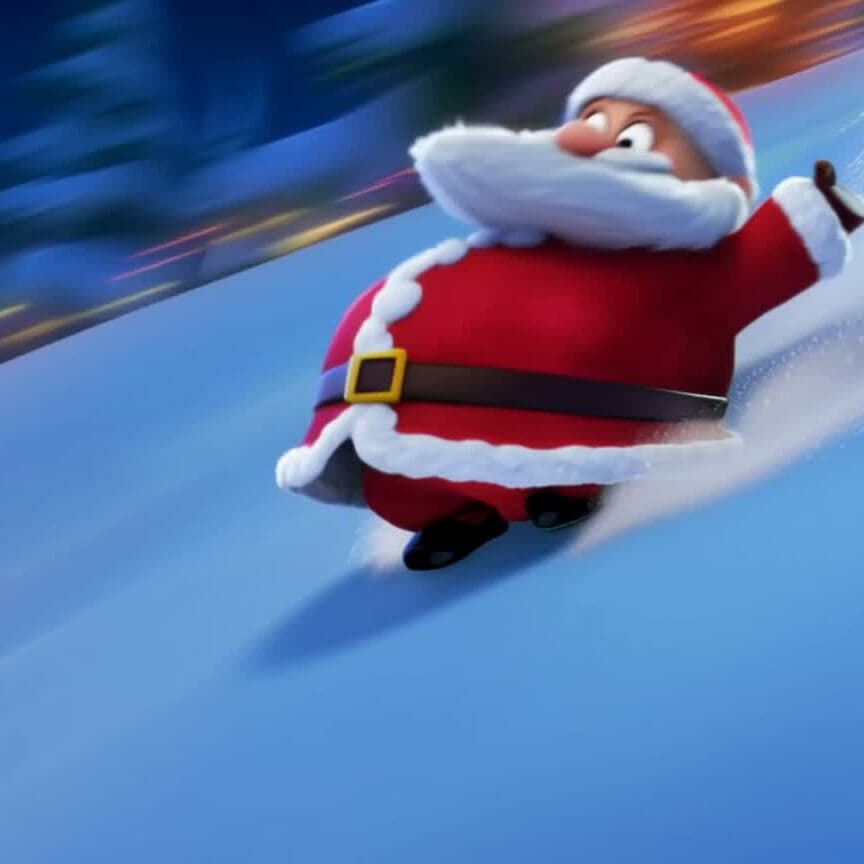
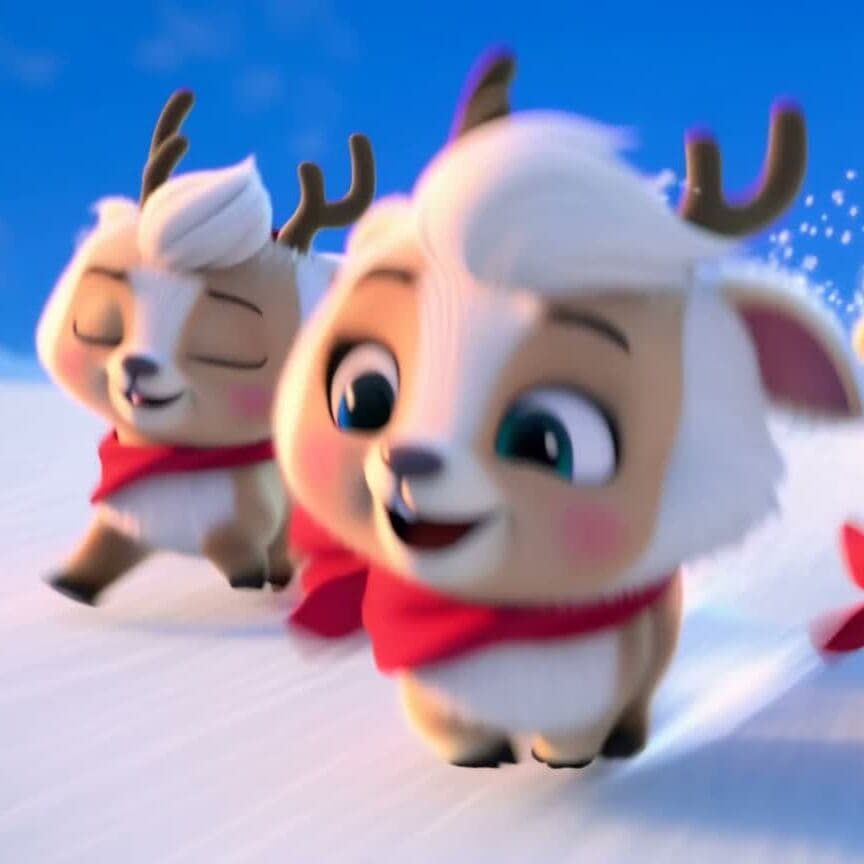




Reindeer pulling Santa Claus's sleigh are images children worldwide imagine on Christmas Eve. Eight reindeer with specific names, flying across the sky, landing on house rooftops, waiting for Santa to deliver gifts, and flying on to the next house. And the most famous is Rudolph, the red-nosed reindeer who leads the way through foggy nights. These characters weren't born simultaneously or from the same origin, but were gradually added to Santa Claus legend until becoming essential parts.
Real reindeer can't fly or have glowing noses, but they're amazing animals in their own way. They live in Arctic and sub-Arctic regions, adapted to survive in the coldest conditions on Earth, and have long relationships with humans, especially indigenous peoples in those regions. How reindeer became part of Christmas celebrations has interesting cultural and historical reasons.
Real Reindeer in Nature
Reindeer (Rangifer tarandus), or called caribou in North America, are medium to large mammals in the deer family. They live in boreal forests and Arctic and sub-Arctic tundra, covering Alaska, Canada, Greenland, Norway, Sweden, Finland, and Russia. Total global population is about 5 million, but numbers are declining in many areas due to climate change.
Reindeer have special adaptations to survive in the Arctic. Their fur has two layers. The inner layer is thick soft fur for warmth. The outer layer is hollow hair with air inside, helping them float when crossing rivers or lakes. Their hooves are wide and can spread, helping distribute weight on snow and dig for food under snow. Hooves also change seasonally. Hard and sharp in winter to dig ice. Soft and spongy in summer to walk on wet ground.
Reindeer eyes change color seasonally. In summer they're golden. In winter they're blue. This change helps them see better in the low light of Arctic winter, where it may be dark all the time for months. They can see UV light, which helps see things that reflect UV like white animal fur, snow, and lichen plants they eat.
Reindeer are the only deer species where both males and females have antlers. Adult male antlers can span up to 1.3 meters, used to fight for females during mating season. Female antlers are much smaller but used to dig snow for food in winter. Interestingly, males shed antlers after mating season (around November-December), but females keep antlers until spring. So Santa's reindeer with antlers on Christmas Eve (December 24) are probably all females!
Reindeer and Humans
Reindeer have had relationships with humans for thousands of years. Arctic indigenous peoples like Sami in Scandinavia, Nenets in Russia, and Inuit in North America rely on reindeer for survival. They raise reindeer semi-domestically by letting them forage themselves but tracking and owning herds.
The Sami living in Lapland (covering northern Norway, Sweden, Finland, and Russia) have raised reindeer for centuries. They migrate with reindeer herds, from coastal areas in summer to continental interiors in winter. Reindeer herding isn't just an occupation but a way of life and cultural identity. Sami culture, language, music, and art are inseparably connected to reindeer.
Reindeer provide many benefits. Meat is high-protein food. Hides are used for clothing, rugs, and tents. Bones and antlers are used for tools and artwork. Fur is used for mattresses and winter coats. And even sinews are used as rope. No part of reindeer is wasted. Every part has value.
In the past, reindeer were also used to pull sleighs, wagons, and move tents. Sami and other indigenous peoples used reindeer-pulled sleighs to travel in snow. This may be the origin of Santa's reindeer-pulled sleigh image. Although they didn't fly in the air, traveling on snow in quiet cold nights was probably beautiful and magical in its own way.
Reindeer benefits:
- Meat: High-protein and nutritious food
- Hide: Clothing, shoes, and tents
- Antlers and bones: Tools, weapons, and artwork
- Transportation: Pulling sleighs and wagons
🎁 Learn about Christmas presents →
Santa's Eight Reindeer
The poem "A Visit from St. Nicholas" published in 1823 was the first to mention Santa's reindeer. The poem described "eight tiny reindeer" pulling his sleigh and named them: Dasher, Dancer, Prancer, Vixen, Comet, Cupid, Dunder, and Blixem (the last two later changed to Donner and Blitzen, which are German for thunder and lightning).
Each name has meaning and personality. Dasher means quick runner, agile. Dancer means dancer, graceful. Prancer means prancer, proud. Vixen means female fox or fierce woman, showing fierceness. Comet means comet, fast and bright. Cupid means god of love, bringing love. Donner (Thunder) means thunder, strong and powerful. Blitzen (Lightning) means lightning, swift and shining.
In pop culture, each reindeer received more personality. Movies, books, and cartoons portrayed them with different temperaments. Dasher is the fastest leader. Dancer is graceful and moves beautifully. Prancer is proud and likes to show off. Vixen is smart and fierce. Comet loves speed. Cupid is kind and gentle. Donner is strong. Blitzen is swift.
Reindeer order is also important. In the original poem, they were arranged in pairs: Dasher with Dancer, Prancer with Vixen, Comet with Cupid, Dunder with Blixem. This pairing shows each reindeer pair has duties and works together. Some later versions changed the order, but the eight names remained the same (until Rudolph came along).
The eight reindeer:
- Dasher: Agile and swift
- Dancer: Moves gracefully
- Prancer: Prances proudly
- Vixen: Fierce but smart
- Comet: Fast like a comet
- Cupid: Kind, brings love
- Donner: Strong like thunder
- Blitzen: Swift like lightning
🎄 Read about Christmas trees →
Rudolph the Red-Nosed Reindeer
Rudolph the red-nosed reindeer is a character created later. In 1939, Robert L. May, an advertising writer for Montgomery Ward department store, was assigned to create a free coloring book for children during Christmas. May created the character Rudolph, a small reindeer with a glowing red nose, teased by friends and not allowed to join games.
On a very foggy Christmas Eve, Santa worried he couldn't see the way and wouldn't deliver gifts on time. He saw Rudolph's nose glowing brightly, so he asked Rudolph to lead the front of the sleigh. With his glowing nose, Rudolph led Santa flying around the world on that dark foggy night, successfully delivering gifts to all children. After that, Rudolph became a hero and was accepted.
This story reflects themes of accepting differences and finding value in what's seen as defects. Rudolph's red nose that made him teased became a special gift that helped Santa and children worldwide. This theme teaches children to accept differences and not fear standing out.
May's book was very popular. Montgomery Ward distributed over 2.4 million copies in 1939, and over 6 million copies in following years. In 1949, Johnny Marks, May's brother-in-law, composed the song "Rudolph the Red-Nosed Reindeer." Gene Autry, a country singer, recorded this song and it became the best-selling Christmas song ever, second only to "White Christmas."
In 1964, the stop-motion animation film "Rudolph the Red-Nosed Reindeer" aired on television, becoming the most-watched Christmas special in history. The film added new characters like Hermey the elf who wants to be a dentist, Yukon Cornelius the gold miner, and Abominable Snow Monster (Bumble), a small island full of unwanted toys, and Clarice the doe who loves Rudolph. This film airs every year and has become a Christmas tradition.
Science of Flying and Glowing Noses
Scientists and fun-lovers try to explain how Santa's reindeer can fly. The realistic answer is they can't. Reindeer have no wings, are too heavy, and anatomy isn't suitable for flight. But that doesn't stop people from creating fun theories.
One theory says reindeer eat special mushrooms that make them hallucinate seeing themselves fly, but actually they're still running on the ground. Another theory says Santa uses "Christmas magic" or advanced technology no one knows. Physics theories say they might use energy from cosmic radiation, Earth's magnetic field, or dark energy that scientists don't yet understand.
For Rudolph's nose, some scientists explain it might be bioluminescence like fireflies or deep-sea fish. But no mammal species can create light themselves. Another option is excessive blood circulation to the nose making it look red and so warm it feels like glowing. Or might be special light reflection. But all these are fun speculation more than real explanation.
In 2012, scientists from University of Tromsø in Norway studied with thermographic cameras and found reindeer noses have very dense capillaries and higher temperature than other body parts because they must warm extremely cold air before entering lungs. This might explain why Rudolph has a red warm nose. But doesn't explain why it glows. So the best answer remains "Christmas magic."
Theories of reindeer flight:
- Christmas magic: Traditional explanation
- Special mushrooms: Makes them hallucinate flying
- Advanced technology: Santa has science we don't know
- Natural energy: Uses magnetic fields or cosmic radiation
🎁 See other randomization tools →
Reindeer in Pop Culture
Besides the song "Rudolph the Red-Nosed Reindeer," there are other Christmas songs about reindeer. "Grandma Got Run Over by a Reindeer" is a comedic song telling the story of grandma being hit by Santa's reindeer while walking home. "Up on the Housetop" mentions the sound of reindeer hooves on rooftops. These songs have become part of Christmas classics.
Many movies and TV series feature reindeer. "Prancer" (1989) tells the story of a girl who finds an injured reindeer and believes it's Santa's Prancer. "The Year Without a Santa Claus" (1974) has Vixen appearing solo. The British animated series "Robbie the Reindeer" tells the story of Rudolph's son trying to find his own way.
In advertising and marketing, reindeer appear everywhere during Christmas. From cards, decorations, toys, to clothing and food. Reindeer shapes with branched antlers and noses (especially red) have become instantly recognizable Christmas symbols. Reindeer toys, from dolls to models, are popular gifts for children.
Reindeer-shaped Christmas decorations, especially Rudolph, sell very well. Many families have decorations of each reindeer hanging on Christmas trees. Some collect entire sets of eight or nine reindeer decorations. Some have only Rudolph as special. Ceramic or plastic reindeer figurines are also popular home decorations during Christmas.
🎄 See other randomization tools →
Drawing and Designing Reindeer
Reindeer in Christmas art are usually drawn in cute cartoon style rather than realistic. Light brown bodies. Large beautiful branched antlers. Big cute eyes. Sometimes wearing bells or red straps around necks. And sometimes smiling. These characteristics make reindeer look friendly and cute for children, not scary wild animals.
Rudolph is often drawn with a bright red glowing nose. Sometimes with light circles around the nose. He's often slightly lighter brown than other reindeer because he's a small reindeer, and often has kind gentle eyes. His face is often drawn looking slightly shy but brave, reflecting personality from the story.
Reindeer design for decorations varies widely. From cute cartoons to beautifully realistic. From natural materials like wood and wicker to shiny plastic and shiny metal. Some prefer reindeer that look classic and elegant. Some prefer fun and colorful. Some create reindeer from recycled materials like bottles, wood pallets, or paper.
Outdoor reindeer are often made from wire frames wrapped with LED lights creating glowing reindeer shapes in dark nights. Some homes have entire herds pulling sleighs on rooftops. Some have only Rudolph in the front yard. Some have giant reindeer several meters tall as decoration highlights. These reindeer lights have become symbols of homes celebrating Christmas.
🎁 See other randomization tools →
Reindeer with Tourism and Economy
Santa and reindeer-themed tourism is a major industry in Arctic regions. Rovaniemi in Finland promotes itself as "Santa Claus's official home" and is a popular destination for tourists, especially from Asia. Tourists visit Santa's office, ride sleighs pulled by real reindeer, play in snow, and view northern lights.
Riding reindeer-pulled sleighs is a popular activity. Although they don't fly in the air, riding sleighs through snowy forests in Lapland's silent beauty is considered a magical experience. Reindeer are trained to pull sleighs and are accustomed to humans. Tourists learn about reindeer life and Sami culture.
Reindeer farms in Scandinavia, Russia, and Alaska open to tourists. Tourists see reindeer up close, feed them, take photos, and learn about reindeer herding. Some farms have souvenir shops, restaurants serving reindeer meat, and galleries of art from antlers and hides.
Reindeer products have both local and international markets. Reindeer meat is considered specialty food. High protein, low fat, and distinctive taste. Restaurants in Northern Europe serve grilled reindeer, stews, or dried meat. Reindeer hides are used for gloves, shoes, and clothing for cold weather. Souvenirs from antlers and hides are popular gifts.
✨ See other randomization tools →
Reindeer Conservation
Although total reindeer population still numbers millions, some populations are declining worryingly. Climate change is the biggest threat. Rising temperatures cause snow to melt and refreeze as ice. Reindeer cannot dig through thick ice to find lichen plants under snow. Leading to starvation and mass deaths.
Industrial development like mining oil, gas, and minerals in the Arctic destroys reindeer habitat. Roads and oil pipelines block reindeer migration routes. Forests are destroyed for mines and factories. Noise and pollution disturb wildlife. These developments conflict with indigenous peoples' rights and ways of life who depend on reindeer.
Hunters and predators like wolves, grizzly bears, and polar bears are also threats. But this is part of natural ecosystems. Problems occur when humans change balance. Like hunting wolves to extinction making reindeer population increase until eating all plants. Or building roads that make predators access previously remote areas easier.
Reindeer conservation requires cooperation between governments, indigenous peoples, scientists, and industry. Protecting important habitats. Limiting development in sensitive areas. Respecting migration routes. And listening to indigenous peoples who have knowledge and experience across generations are important. Sustainable and responsible tourism can create income for local communities and create incentives for conservation.
Threats to reindeer:
- Climate change: Snow freezes into ice, can't dig for food
- Industrial development: Destroys habitat, blocks migration routes
- Pollution and noise: Disturbs living
- Loss of biodiversity: Ecosystems lose balance
Conclusion
Reindeer are amazing animals both in reality and imagination. In nature, they're animals remarkably adapted, living in the harshest environments on Earth, and having long relationships with humans. In legend, they're Santa Claus's magical helpers, pulling flying sleighs around the world to deliver gifts to children.
From the eight reindeer in "'Twas the Night Before Christmas" poem to Rudolph the red-nosed reindeer who became a hero, these characters are deeply embedded in Christmas culture. They teach children about differences, acceptance, teamwork, and finding value in standing out. Countless songs, movies, books, and decorations celebrate these reindeer.
At the same time, preserving real reindeer in nature is our responsibility. Climate change and development threaten their survival. Supporting conservation, responsible tourism, and respecting indigenous peoples' rights help keep reindeer running in Arctic forests and (in imagination) flying in Christmas Eve skies.
Ready to randomly select lucky winners with reindeer? Try Reindeer Randomizer to bring reindeer magic to your Christmas activities. Let Rudolph and friends help choose lucky winners to receive gifts, prizes, or do special missions on Christmas Eve.
Interested in other Christmas topics? See Christmas Present Christmas Tree Santa Claus or other randomization methods