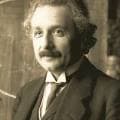
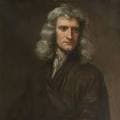
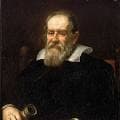
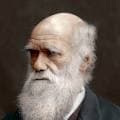
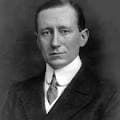
Throughout human history, certain exceptional minds have fundamentally transformed our understanding of reality. These scientists—through brilliant insight, relentless curiosity, and extraordinary dedication—revealed truths about the physical universe, biological world, and fundamental nature of existence that previous generations could never have imagined. From Albert Einstein's revolutionary theories that reshaped physics to Marie Curie's pioneering work with radioactivity, from Charles Darwin's theory of evolution to Isaac Newton's laws of motion, these individuals changed not just what humanity knows but how we think about knowledge itself.
The contributions of great scientists extend far beyond their specific discoveries. They established methods of investigation, created conceptual frameworks, invented instruments and techniques, and inspired generations of future researchers. Understanding their lives, work, and historical context illuminates both the nature of scientific progress and the human qualities—creativity, persistence, courage, curiosity—that enable extraordinary achievement.
The Scientific Revolution and the Birth of Modern Science
Before the sixteenth and seventeenth centuries, much European understanding of nature relied on ancient authorities like Aristotle rather than systematic observation and experimentation. The Scientific Revolution transformed this approach, establishing empirical investigation, mathematical description, and experimental verification as the foundations of natural knowledge.
Key Figures of the Scientific Revolution:
Galileo Galilei (1564-1642) pioneered the use of systematic experimentation and mathematical analysis in physics. His telescopic astronomical observations—mountains on the Moon, Jupiter's moons, Venus's phases—provided evidence for the Copernican heliocentric model and challenged Aristotelian cosmology. Despite facing Inquisition persecution, Galileo maintained that mathematics provided the language of nature and that observation trumped philosophical authority.
Isaac Newton (1643-1727) synthesized previous work into a comprehensive mathematical framework explaining motion and gravity. His "Philosophiæ Naturalis Principia Mathematica" (1687) presented the three laws of motion and the law of universal gravitation, providing a unified explanation for terrestrial and celestial mechanics. Newton's work established the paradigm that natural phenomena follow mathematical laws discoverable through reason and observation.
The Newtonian Worldview:
Newton's framework dominated physics for over two centuries, creating a mechanistic worldview where the universe operated like clockwork according to deterministic mathematical laws. This paradigm proved extraordinarily successful—enabling prediction of planetary motions, engineering of machines, and technological advancement. The Newtonian synthesis represented perhaps the most successful scientific theory ever developed, remaining essentially unchallenged until Einstein's relativity.
The Scientific Revolution established principles still central to scientific method: systematic observation, experimental testing, mathematical description, publication and peer review, and willingness to revise theories based on evidence. These methods, revolutionary in their time, now define scientific practice globally.
The Age of Enlightenment and Classification
The eighteenth century saw scientists working to classify and organize the natural world, establishing taxonomies and systematic descriptions of diverse phenomena. This era emphasized observation, collection, and categorization as foundations for understanding nature's diversity and patterns.
Aristotle's Enduring Influence:
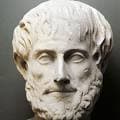
Though ancient, Aristotle (384-322 BCE) deserves recognition as perhaps history's first systematic scientist. His works on logic, biology, physics, and natural philosophy established foundations for centuries of thought. Aristotle pioneered empirical observation in biology, classifying hundreds of animal species and describing their anatomy and behavior with remarkable accuracy.
While many specific Aristotelian claims proved incorrect by modern standards, his insistence on systematic observation and logical reasoning established crucial precedents. The scientific method itself owes debt to Aristotelian emphasis on gathering observations before drawing conclusions.
Revolutionary Classifications:
The systematic classification of nature reached new heights in the eighteenth century through work like Carl Linnaeus's taxonomic system organizing living things into hierarchical categories. This organizational work, while less glamorous than dramatic new theories, proved essential for scientific progress by creating common language and framework for discussing natural diversity.
The Nineteenth Century - Evolution, Energy, and Electromagnetism
The nineteenth century witnessed transformative developments across multiple scientific domains. Biology saw the theory of evolution, physics grappled with energy and thermodynamics, and electromagnetism emerged as a fundamental force.
Charles Darwin and Evolutionary Theory:
Charles Darwin (1809-1882) fundamentally transformed biology and humanity's self-understanding through his theory of evolution by natural selection. His observations during the Beagle voyage, particularly of Galápagos finches and other species variations, led him to recognize that species change over time through differential survival and reproduction.
"On the Origin of Species" (1859) presented extensive evidence that all living things descended from common ancestors through gradual modification. Natural selection—the process where heritable traits increasing survival and reproduction become more common over generations—provided a mechanism explaining life's diversity and adaptation. This theory unified biology, explaining everything from anatomical similarities to geographical distribution patterns to the fossil record.
Darwin's theory proved controversial precisely because it was so powerful—it explained humanity's place in nature without requiring divine intervention or special creation. The recognition that humans share ancestry with other primates challenged prevailing religious views and demanded reconceptualization of human nature. Yet the evidence proved overwhelming, and evolution became the foundation of modern biology.
Louis Pasteur and Germ Theory:
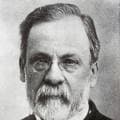
Louis Pasteur (1822-1895) revolutionized medicine and biology through work on microorganisms and disease. His experiments definitively refuted spontaneous generation—the belief that life could arise from non-living matter—by demonstrating that microbial growth required existing microorganisms.
Pasteur's germ theory of disease established that many illnesses result from microscopic organisms invading the body. This insight transformed medical practice, leading to antiseptic surgery, vaccination development, and sanitation improvements that saved countless lives. His work on pasteurization—heating liquids to kill harmful bacteria—remains crucial for food safety today.
The practical impact of Pasteur's work cannot be overstated. Before germ theory, doctors didn't understand disease transmission and often spread infection themselves through contaminated hands and instruments. Pasteur's insights enabled the development of modern hygiene, vaccination, and medical treatment.
The Early Twentieth Century - Relativity and Quantum Revolution
The early 1900s saw physics transformed twice over—first by Einstein's relativity and then by quantum mechanics. These revolutions overthrew the Newtonian framework that had dominated for centuries, revealing nature far stranger than classical physics imagined.
Albert Einstein and Relativity:
Albert Einstein (1879-1955) stands among history's most influential physicists. His 1905 "miracle year" produced four groundbreaking papers addressing the photoelectric effect, Brownian motion, special relativity, and mass-energy equivalence (E=mc²). Any single paper would have marked significant achievement; together they revolutionized physics.
Special relativity (1905) revealed that space and time are not absolute but relative to the observer's motion. Time slows and lengths contract for objects moving at high speeds. Simultaneity becomes relative—events simultaneous for one observer occur at different times for another moving differently. These predictions, though contradicting common sense, have been verified countless times experimentally.
General relativity (1915) extended these insights to gravity, reconceptualizing it not as a force but as spacetime curvature caused by mass and energy. Massive objects like stars and planets warp the fabric of spacetime, and this curvature guides motion. General relativity predicted phenomena like gravitational lensing, time dilation in gravitational fields, and black holes—all subsequently confirmed observationally.
Einstein's work transcended specific theories. He demonstrated that careful thought experiments and mathematical reasoning could reveal deep truths about reality. His willingness to question fundamental assumptions—the absoluteness of time, the nature of gravity—exemplifies the creative thinking that enables revolutionary science.
Marie Curie and Radioactivity:
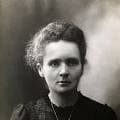
Marie Curie (1867-1934) stands as the most accomplished female scientist in history and the only person to win Nobel Prizes in two different sciences (Physics 1903, Chemistry 1911). Her pioneering research on radioactivity opened entirely new fields of physics and chemistry while providing powerful tools for medicine and research.
Working in difficult conditions with minimal resources, Curie discovered two new elements—polonium and radium—through meticulous chemical separation of radioactive ores. She coined the term "radioactivity" and developed methods for isolating radioactive isotopes. Her work revealed that radioactivity was an atomic phenomenon—showing that atoms could transform into other elements, contradicting the prevailing belief in atomic immutability.
The practical applications of Curie's work have been enormous. Radioactive isotopes became crucial research tools in biology and medicine. Radiation therapy for cancer treatment emerged from her discoveries. Nuclear energy and nuclear weapons both trace back to understanding radioactive decay and atomic transformation.
Curie faced extraordinary obstacles as a woman in early twentieth-century science. Universities barred women from faculty positions; the scientific establishment often dismissed or minimized female contributions. Yet through exceptional brilliance and determination, Curie not only overcame these barriers but achieved recognition as one of the era's preeminent scientists.
The Power of Curiosity and Persistence
Examining these scientists' lives reveals common traits transcending specific historical periods or scientific domains. These characteristics offer insights applicable far beyond science itself.
Relentless Curiosity:
Great scientists share extraordinary curiosity about how things work. They ask questions others overlook, wonder about phenomena others take for granted, and pursue understanding with uncommon intensity. This curiosity often begins in childhood and never diminishes—Einstein famously said he had no special talent, only passionate curiosity.
This questioning extends to fundamentals. Rather than accepting established explanations, revolutionary scientists ask whether basic assumptions are correct. Does time flow the same for everyone? Can species change? Must diseases have external causes? Questioning the unquestioned enables genuinely new discoveries.
Persistence Through Failure:
Scientific progress rarely follows smooth paths. Experiments fail, hypotheses prove wrong, and years of work sometimes produce dead ends. Great scientists persist through these failures, learning from mistakes and maintaining dedication despite setbacks.
Curie spent years processing tons of ore to isolate tiny amounts of radium. Edison famously tried thousands of materials before finding suitable light bulb filaments. Darwin delayed publishing his theory for decades, gathering more evidence and refining his arguments. This persistence despite difficulty separates those who make lasting contributions from those who abandon interesting questions prematurely.
Creative Thinking:
Revolutionary science requires creative leaps—imagining possibilities that prior frameworks excluded, seeing connections others missed, developing novel methods or conceptual approaches. Einstein imagined riding a light beam. Darwin connected observations from geology, biogeography, artificial selection, and natural history into unified theory. Curie invented techniques for isolating radioactive elements that no previous chemist had conceived.
This creativity often involves interdisciplinary thinking—applying concepts from one domain to another, recognizing patterns across apparently unrelated phenomena, or borrowing methods from different fields. The most transformative insights frequently come from such creative connections.
The Role of Historical Context
Scientific achievement never occurs in vacuum—historical, cultural, technological, and social contexts powerfully shape both what questions get asked and what answers become possible. Understanding this context illuminates how science progresses.
Technological Enabling:
New instruments often enable new discoveries. Galileo's telescopic observations required telescope invention. Microscopy enabled Pasteur's microbiological work. Particle accelerators made twentieth-century nuclear physics possible. Sometimes the scientist invents necessary instruments themselves; sometimes technological developments by others make new investigations feasible.
This technological dependence means timing matters enormously. Many discoveries become possible only when sufficient technological capability exists. Earlier scientists simply lacked tools needed to investigate certain questions regardless of their brilliance.
Cultural and Social Factors:
Prevailing cultural attitudes affect which questions seem important and which answers seem plausible. Religious frameworks, philosophical assumptions, economic priorities, and social structures all influence scientific development. Darwin delayed publishing partly due to anticipated religious controversy. Women faced systematic exclusion from scientific institutions, preventing countless potential contributions. Racial prejudice likewise barred many capable minds from scientific careers.
Understanding these social factors helps explain both why certain discoveries occurred when they did and why others took so long despite their significance being obvious in hindsight. Progress requires not just brilliant individuals but supportive social contexts enabling their work.
Collaborative Networks:
Though we often focus on individual scientists, almost all significant work builds on collaborations, teacher-student relationships, correspondence networks, and institutional support. Newton famously said he stood "on the shoulders of giants"—acknowledging that his work extended previous discoveries rather than emerging from nothing.
Modern science is even more collaborative, with major discoveries often crediting dozens or hundreds of researchers working together. The individualistic "lone genius" narrative, while compelling, often obscures the intensely social nature of scientific knowledge production.
The Profound Impact of Scientific Discovery
The work of great scientists transforms not just academic knowledge but everyday life in countless ways. Understanding these impacts illustrates why scientific achievement matters beyond intellectual satisfaction.
Medical Advances:
Pasteur's germ theory enabled modern medicine. Curie's radioactivity research led to radiation therapy. Fleming's discovery of penicillin (building on earlier work) ushered in the antibiotic age. These and countless other scientific insights have extended human lifespans, reduced suffering, and cured previously fatal diseases.
The average person in developed countries lives thirty years longer than a century ago—largely due to medical advances rooted in scientific discovery. Infant mortality plummeted, infectious diseases became treatable, surgical techniques improved dramatically. These practical benefits flow directly from fundamental research with no guarantee of immediate application.
Technological Revolution:
Understanding electricity and magnetism enabled electric power, telecommunications, computers, and countless modern technologies. Quantum mechanics made possible semiconductors, lasers, and nuclear energy. Relativity proves essential for GPS accuracy. The technologies pervading modern life trace back to scientific discoveries often made decades or centuries earlier.
Scientists making fundamental discoveries rarely envision their ultimate applications. Einstein couldn't have imagined GPS. Curie couldn't have foreseen nuclear power plants. Darwin couldn't have anticipated evolutionary algorithms in computer science. Pure research driven by curiosity produces unexpected practical benefits.
Conceptual Transformations:
Beyond practical applications, scientific discoveries transform how humanity understands itself and the universe. Copernicus displaced Earth from the cosmic center. Darwin revealed humanity's kinship with all life. Einstein showed the flexibility of time and space. Quantum mechanics revealed the probabilistic nature of reality. These insights changed not just scientific knowledge but philosophy, art, literature, and human self-conception.
The Diversity of Scientific Genius
Great scientists come from varied backgrounds, follow different paths, and exhibit diverse working styles. This diversity reveals that scientific excellence doesn't require any single personality type or life trajectory.
Self-Taught Versus Formally Educated:
Some great scientists followed traditional academic paths with elite educations and formal credentials. Others were largely self-taught or followed unconventional routes. Darwin left medical school and later pursued geology and biology without formal advanced training in those fields. Faraday, who made foundational contributions to electromagnetism, received minimal formal education.
This variety suggests that while education can help, it's not absolutely necessary for exceptional contribution. Curiosity, creativity, and persistence matter more than credentials. Modern science's increasing specialization and credential requirements may unfortunately exclude some potential contributors who would have flourished in earlier eras' more accessible environment.
Varied Working Styles:
Some scientists work in intense bursts, making rapid breakthroughs. Others pursue steady systematic investigation over decades. Some work primarily alone; others thrive in collaborative environments. Some excel at theory; others at experimentation. This diversity in approach means multiple paths lead to significant contribution.
Different scientific domains also reward different strengths. Observational sciences like astronomy and natural history benefit from careful systematic observation. Experimental sciences like chemistry and biology require experimental design and manipulation. Theoretical sciences like mathematics and theoretical physics emphasize abstract reasoning and mathematical skill.
International Contributions:
Great science transcends national boundaries. The scientists discussed here come from multiple countries—Italy, England, France, Poland, Germany, and Greece. Scientific knowledge is international by nature, with discoveries made anywhere potentially impacting understanding everywhere. This international character makes science a model for global cooperation and shared human endeavor.
Learning from Scientific Greats
While few will achieve Newton's or Einstein's level of contribution, everyone can learn from these exemplars. Their approaches, attitudes, and methods offer lessons applicable across many domains.
Question Assumptions:
Revolutionary insights often come from questioning assumptions others accept unthinkingly. What seems obviously true might actually be historically contingent belief. Asking "but why must it be that way?" or "what if the opposite were true?" can reveal previously invisible possibilities.
This questioning requires intellectual courage—the willingness to consider that established authorities might be wrong, that common sense might mislead, that previous generations missed important truths. Combined with appropriate humility (recognizing that most wild ideas prove wrong), this questioning enables genuine progress.
Embrace Failure as Learning:
Scientific history is littered with failed experiments, incorrect hypotheses, and dead-end investigations. Yet these failures often teach as much as successes. Learning what doesn't work narrows possibilities and sometimes reveals unexpected new directions.
Developing comfort with failure—viewing it as information rather than personal inadequacy—enables persistence and risk-taking. Many quit too early, abandoning potentially fruitful lines of investigation because initial attempts failed. The scientists who made lasting contributions often distinguished themselves primarily by continuing when others would have stopped.
Follow Your Curiosity:
Many great discoveries came from scientists following genuine curiosity rather than seeking specific practical applications. Curie investigated radioactivity because it fascinated her, not because she anticipated medical applications. Einstein pursued relativity to resolve theoretical problems, not to enable GPS.
This pattern suggests that following genuine intellectual interest, even without clear practical justification, often proves ultimately productive. The pressure to demonstrate immediate practical value can actually hinder the fundamental research that later enables transformative applications.
Women and Minorities in Science
The historical scientific establishment systematically excluded women and racial minorities, preventing countless potential contributions and distorting our understanding of who can be a scientist. Recognizing this history reveals both the injustice of past exclusion and the ongoing challenges toward full inclusion.
Barriers Faced:
Women faced explicit exclusion from universities, scientific societies, and research positions. Many worked as unpaid assistants to male relatives, their contributions minimized or credited to men. Curie's exceptional achievement occurred despite, not because of, institutional structures.
Racial minorities faced similar or worse barriers. Scientific racism misused biology to justify discrimination. Colonial systems prevented most of the world's population from accessing scientific education or careers. The scientists we celebrate come almost exclusively from privileged groups in powerful nations—not because others lacked ability but because systematic exclusion prevented their participation.
Modern Progress and Continuing Challenges:
Contemporary science is far more inclusive than a century ago, with legal barriers to women and minority participation largely removed in many countries. Yet informal obstacles remain—implicit bias, hostile environments, lack of mentorship, and discrimination. Achieving true equality requires ongoing effort to identify and address these subtler barriers.
The push for inclusion benefits everyone. Diverse perspectives often enable insights that homogeneous groups miss. Problems that seem intractable from one viewpoint sometimes yield to approaches from different backgrounds. Building scientific communities that welcome all capable individuals, regardless of gender, race, nationality, or socioeconomic background, strengthens science itself.
The Future of Scientific Discovery
Standing in the early twenty-first century, we can only imagine what future scientists will discover. History suggests the next century will bring insights we currently cannot conceive, just as relativity and quantum mechanics remained unimaginable before their development.
Emerging Frontiers:
Current scientific frontiers span from the incomprehensibly large (cosmology, astrophysics) to the infinitesimally small (particle physics, quantum computing), from the distant past (origins of life, early universe) to complex systems (neuroscience, climate science). Each frontier promises potential transformative discoveries.
Interdisciplinary work increasingly drives progress. Understanding consciousness might require integrating neuroscience, psychology, philosophy, and physics. Climate science combines atmospheric physics, biology, oceanography, and earth science. The next Einstein might need expertise spanning multiple traditional disciplines.
The Changing Nature of Science:
Modern science differs dramatically from past eras in scale, specialization, and collaboration. Individual scientists rarely work alone; major discoveries typically credit large teams. Billion-dollar instruments like particle accelerators or space telescopes require international cooperation. The amount of specialized knowledge needed means no one can master all of science—or even all of one subdiscipline.
This evolution raises questions about how future scientific history will look. Will we celebrate individual scientists or research teams? How do we attribute credit when thousands contribute? Can non-specialists still understand cutting-edge work, or has science become too specialized? These questions lack clear answers, but reflect genuine challenges for how science communicates with broader society.
Conclusion
The famous scientists whose work we've explored represent human curiosity and intellect at their finest. Through relentless questioning, creative thinking, and extraordinary persistence, these individuals revealed truths about reality that transformed human understanding and improved countless lives. Their achievements remind us that systematic investigation and evidence-based reasoning can unlock nature's secrets and solve problems that once seemed insurmountable.
Key Insights:
- Curiosity drives discovery: Asking fundamental questions leads to revolutionary insights
- Persistence through failure: Great science requires continuing despite setbacks and wrong turns
- Context matters: Historical, technological, and social factors shape scientific progress
- Diverse paths: No single background or approach guarantees scientific achievement
- Collaboration builds knowledge: Science progresses through building on others' work
- Applications emerge unpredictably: Pure research often enables unexpected practical benefits
- Ongoing challenges: Achieving full inclusion requires addressing persistent barriers
Whether you're a student beginning scientific education, a researcher pursuing new knowledge, an educator inspiring future scientists, or simply someone curious about the universe, these scientific pioneers offer inspiration and guidance. Their examples show that understanding nature requires not genius alone but sustained curiosity, creative thinking, careful observation, and willingness to follow evidence wherever it leads.
Ready to discover? Use our Famous Scientists randomizer to explore the remarkable individuals whose brilliant minds and groundbreaking work shaped modern understanding of the universe and our place within it.
Explore more about human achievement in our guide to decision-making, or discover how random selection plays a role in scientific research and experimental design.