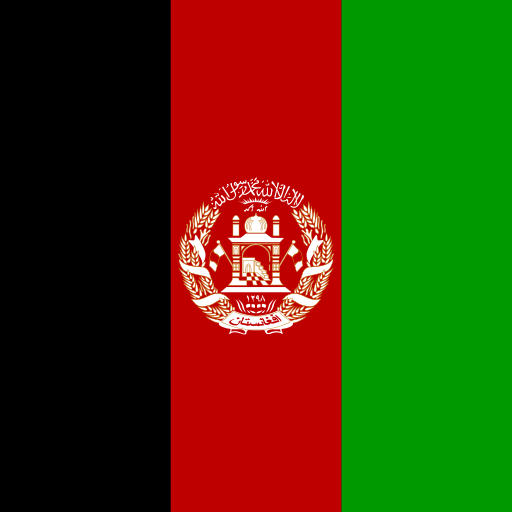
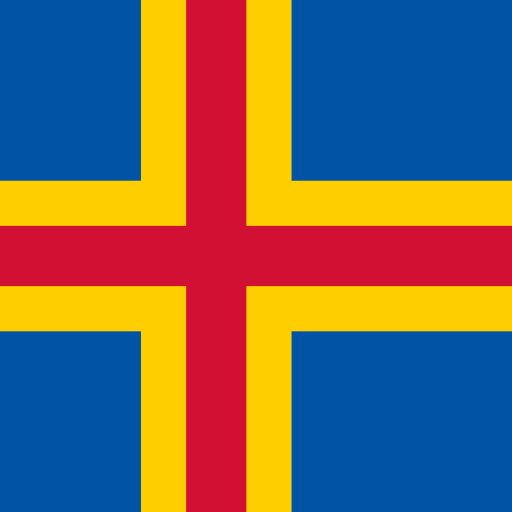

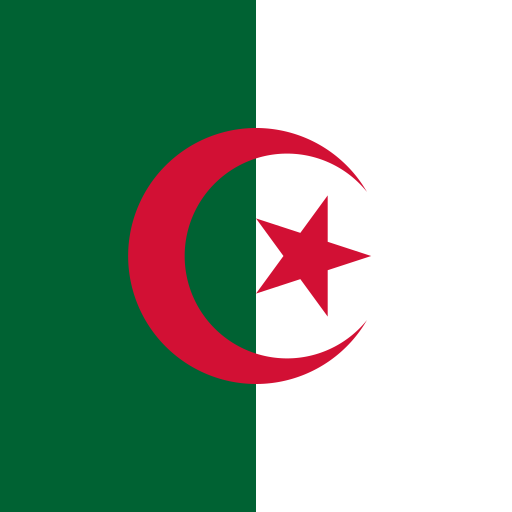
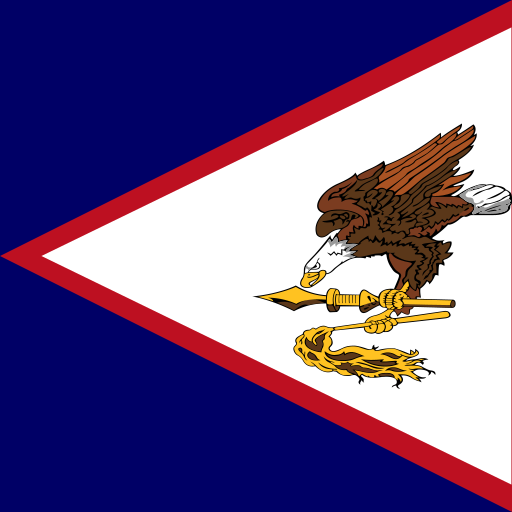
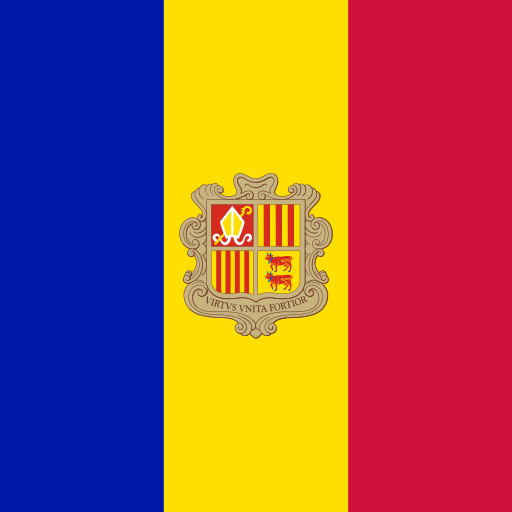
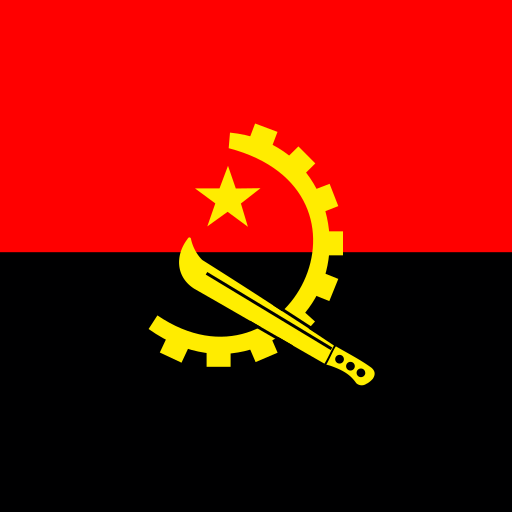
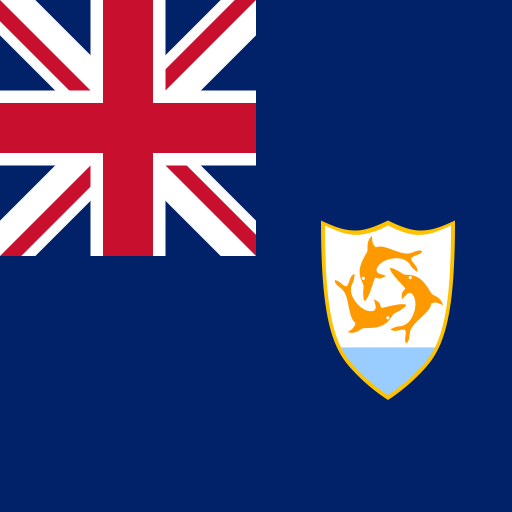
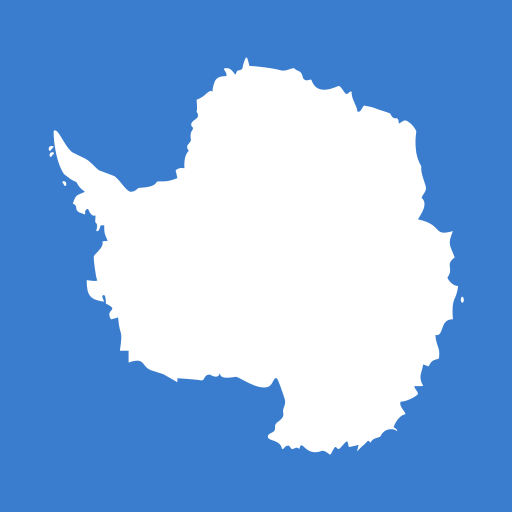


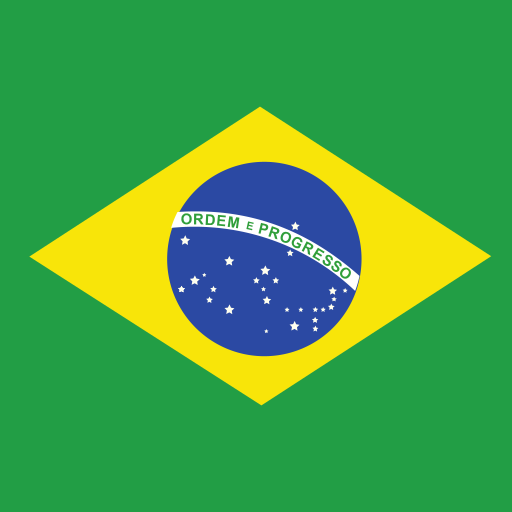
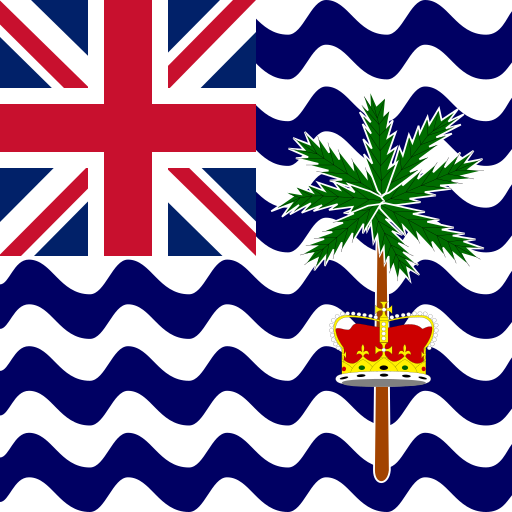
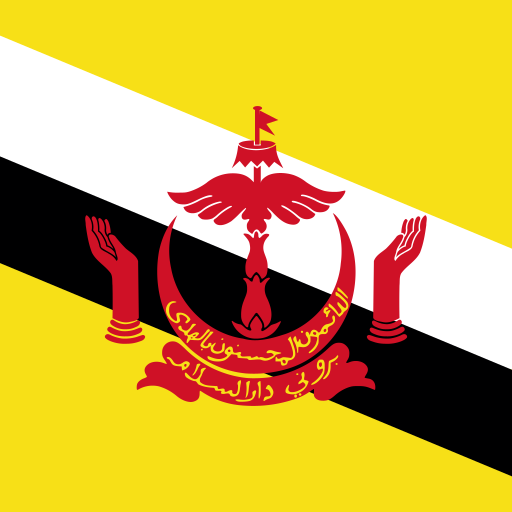
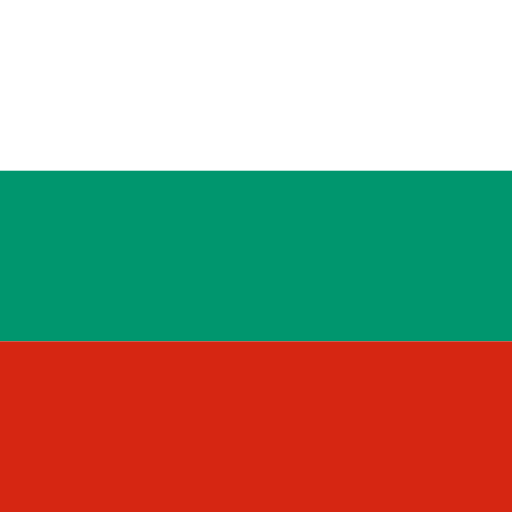

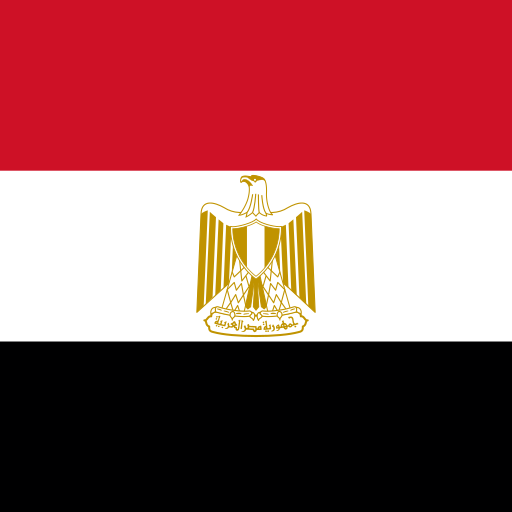
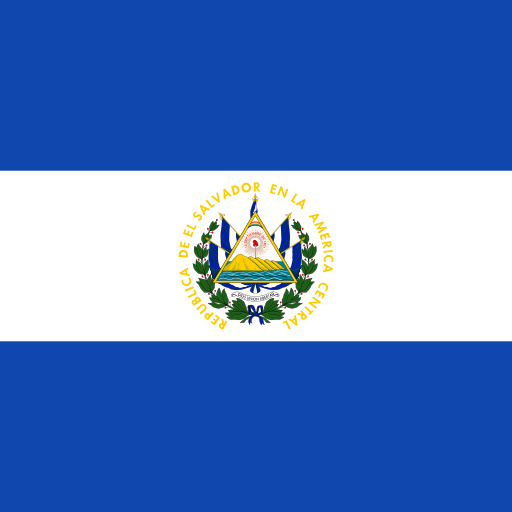
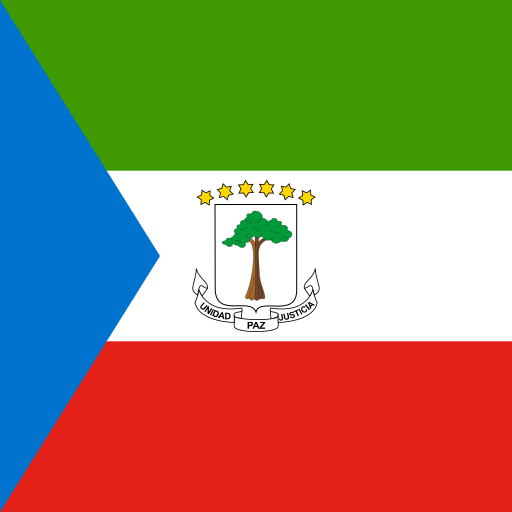
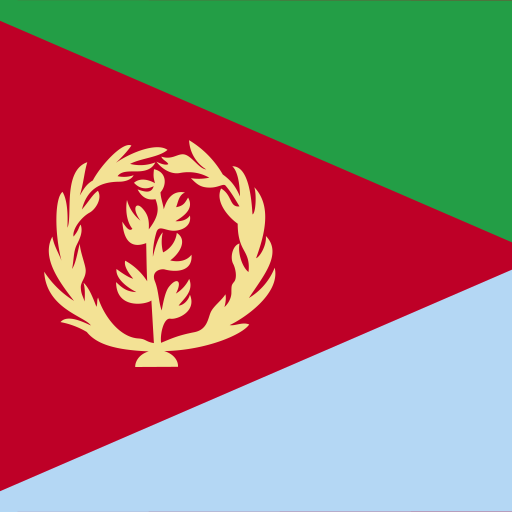



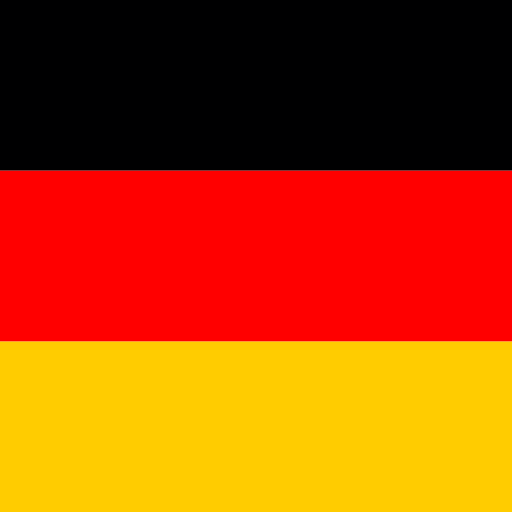
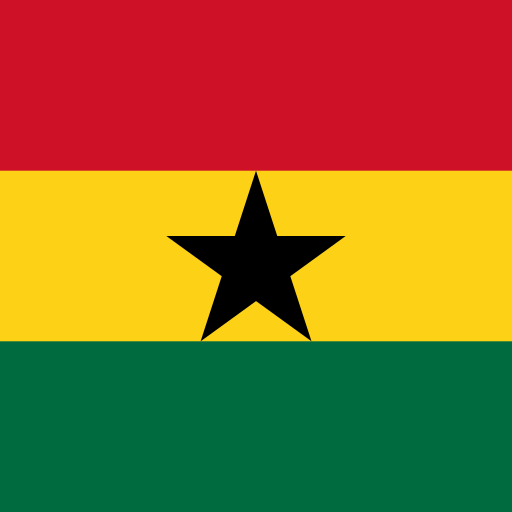
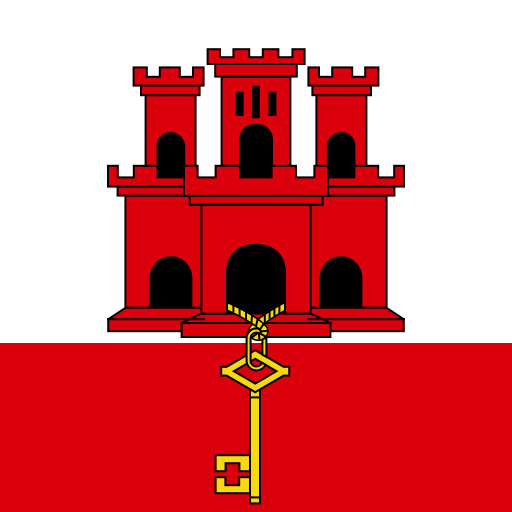
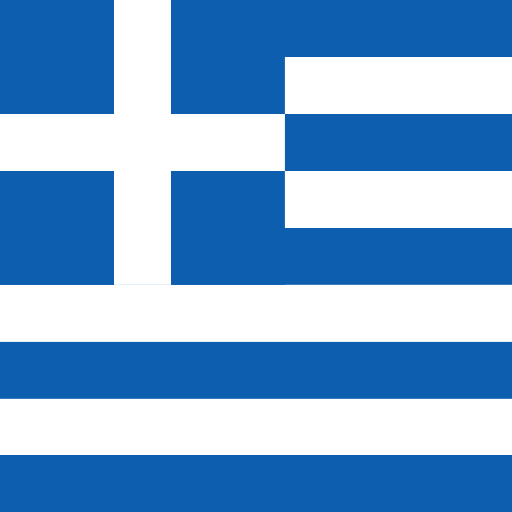



Planet Earth divides into 195 sovereign nations recognized by the United Nations, plus several territories and disputed regions with varying degrees of independence. These countries span six continents, encompass every climate zone from Arctic tundra to equatorial rainforest, and contain over eight billion people speaking thousands of languages and practicing countless cultural traditions. Understanding this global diversity reveals both the remarkable variety of human societies and the common threads connecting all humanity across political boundaries.
Countries represent more than arbitrary lines on maps—they embody distinct histories, cultures, languages, governance systems, and relationships with geography. From the vast expanses of Russia spanning eleven time zones to tiny island nations like Nauru covering just eight square miles, from ancient civilizations like China with continuous cultural heritage spanning millennia to recent formations like South Sudan established in 2011, each country tells unique stories about how humans organize societies and relate to the land they inhabit.
The Concept of Nationhood and Sovereignty
The modern nation-state system emerged gradually over centuries, reaching its current form primarily through twentieth-century decolonization. Understanding how this system developed reveals why current political boundaries exist and how they might evolve in the future.
Evolution of National Borders:
For most of human history, political organization followed patterns quite different from modern nation-states. Empires controlled diverse peoples across vast territories. City-states exercised authority over limited regions. Tribal or clan-based organizations governed without fixed territorial boundaries. The concept of clearly defined borders, centralized governments claiming exclusive authority within those borders, and populations sharing national identity represents a relatively recent historical development.
The Peace of Westphalia (1648) is often cited as establishing the principle of territorial sovereignty—that each state possesses supreme authority within its borders without external interference. This principle gradually spread globally, though full implementation took centuries and remains contested in various ways today.
Colonialism and Decolonization:
The current political map reflects profound impact of European colonialism followed by twentieth-century decolonization. European powers colonized most of Africa, much of Asia, the Americas, and Oceania between the sixteenth and nineteenth centuries. The borders they drew often reflected colonial administrative convenience rather than indigenous political organization, cultural boundaries, or geographical logic.
Decolonization after World War II created dozens of new independent nations, particularly in Africa and Asia. These newly independent countries generally maintained colonial borders despite their often arbitrary nature, leading to ongoing challenges where political boundaries cut across ethnic, linguistic, or cultural groups. Many contemporary conflicts trace partially to these colonial-era borders.
Geographic Diversity and Environmental Adaptation
Countries occupy every imaginable environment on Earth, from frozen Arctic regions to scorching deserts, from densely forested tropics to barren mountain peaks. How societies adapt to these diverse environments reveals both human ingenuity and environmental constraints on development.
Climate Zones and Human Settlement:
The distribution of human population across climate zones shows clear patterns. Moderate climates with adequate rainfall support the densest populations—think of temperate Europe, East Asia, and eastern North America. Extreme environments like the Sahara Desert, Arctic tundra, or central Amazonian rainforest support much sparser populations despite vast territories.
Countries in challenging environments developed specialized adaptations. Netherlands engineered elaborate systems to reclaim land from the sea and protect against flooding. Scandinavian nations perfected cold-climate architecture and heating systems. Middle Eastern societies developed water conservation techniques and shade-providing architecture suited to desert heat. These environmental adaptations become integral to national identity and technological expertise.
Geographic Size and Resources:
Country size varies enormously, from Russia's 6.6 million square miles to Vatican City's 0.17 square miles. This size variation profoundly affects national development, political influence, and resource availability. Large countries often possess diverse climates, varied natural resources, and strategic depth but face challenges coordinating governance across vast distances.
Small countries can achieve remarkable prosperity despite limited territory. Singapore's strategic location, human capital development, and institutional quality enabled it to become a wealthy global financial center despite lacking natural resources. Luxembourg, Liechtenstein, and other small nations similarly demonstrate that size doesn't determine prosperity or influence.
Natural Resource Distribution:
Countries vary dramatically in natural resource endowments. Some possess abundant oil (Saudi Arabia, Norway, UAE), mineral wealth (Australia, South Africa), productive agricultural land (United States, Brazil, Ukraine), or fresh water resources (Canada, Russia). Others have minimal natural resources, depending on human capital, strategic location, or specific specialized resources.
Interestingly, resource abundance doesn't automatically ensure prosperity. The "resource curse" describes how countries with abundant natural resources sometimes perform worse economically than those without. Norway managed oil wealth brilliantly, creating sustainable prosperity. Other oil-rich nations squandered potential through corruption, poor governance, or conflict. Institutions and governance quality often matter more than resource endowment alone.
Cultural Diversity and Identity
Countries serve as vessels for distinctive cultures—languages, religions, customs, arts, cuisines, and worldviews developed over generations. This cultural diversity represents one of humanity's greatest treasures while also creating challenges for mutual understanding and cooperation.
Linguistic Diversity:
The world's countries speak over 7,000 languages, though distribution is highly uneven. Papua New Guinea alone has over 800 languages despite its relatively small population. Some countries maintain remarkable multilingualism—India recognizes 22 official languages, Switzerland has four. Others are predominantly monolingual, like Japan or Iceland.
Language shapes thought, culture, and identity in profound ways. Countries sharing languages often maintain special relationships even when politically separate—the Anglosphere, Francophonie, and Arabic-speaking nations all demonstrate linguistic bonds transcending borders. Conversely, linguistic differences within countries sometimes create divisions and conflict, as seen in Belgium's French-Dutch tensions or Canada's English-French dynamics.
Religious Traditions:
Religion profoundly influences culture, law, social norms, and international relationships. Some countries are religiously homogeneous—Saudi Arabia is nearly entirely Muslim, Thailand predominantly Buddhist. Others show remarkable religious diversity—Lebanon has Christian and Muslim populations in careful political balance, India encompasses Hindus, Muslims, Sikhs, Christians, and others.
State relationships with religion vary from official state religions (Iran's Islam, Thailand's Buddhism) to strict secularism (France's laïcité) to pluralistic arrangements recognizing multiple faith traditions. These different approaches reflect historical development and ongoing negotiation between religious and secular authority.
Artistic and Cultural Traditions:
Each country develops distinctive artistic traditions—music, dance, visual arts, literature, cuisine, and crafts. Italian Renaissance art, Japanese tea ceremonies, West African drumming traditions, Mexican muralism, and Indian classical dance each represent irreplaceable cultural achievements arising from specific national contexts.
In our globalized world, cultural traditions both maintain distinctiveness and influence each other. Korean pop music gains global audiences, Japanese anime reaches worldwide, American films dominate international markets, and fusion cuisines blend culinary traditions. This cultural exchange enriches everyone while raising questions about cultural preservation and appropriation.
Political Systems and Governance
Countries organize governance in remarkably diverse ways, from absolute monarchies to direct democracies, from federal systems to unitary states, from single-party states to multi-party democracies. These different systems reflect varied political philosophies, historical developments, and cultural values.
Democracy and Authoritarianism:
Democratic systems—where citizens choose leaders through free and fair elections and enjoy protected political rights—exist across all continents. Established democracies like Switzerland, New Zealand, or Canada maintain long traditions of electoral competition, free press, and civil liberties. Newer democracies face challenges establishing robust institutions and democratic norms.
Authoritarian systems, where political power concentrates in individual leaders or small groups without meaningful electoral accountability, also appear globally. Some, like Singapore, combine authoritarian politics with rule of law and economic prosperity. Others combine authoritarianism with poverty and instability.
Most countries fall somewhere between democratic and authoritarian extremes, with partially free elections, limited civil liberties, or inconsistent rule of law. These hybrid systems' outcomes depend heavily on specific institutional arrangements and political culture.
Federal Versus Unitary Systems:
Federal systems like the United States, Germany, or India devolve significant power to regional governments (states, provinces, länder). This arrangement can accommodate regional diversity, allow policy experimentation, and limit central government power. However, it also creates complexity and potential federal-state conflicts.
Unitary systems concentrate power in central governments, with regional authorities exercising only delegated powers. France, Japan, and most countries use unitary systems. While simpler and more uniform, they may respond less well to regional differences and local preferences.
Monarchies and Republics:
Most modern monarchies are constitutional, where hereditary monarchs serve ceremonial roles while elected governments exercise actual power—think United Kingdom, Spain, or Japan. These systems maintain traditional institutions while operating democratically.
Absolute monarchies, where monarchs hold significant political power, are rare—Saudi Arabia, Brunei, and Vatican City represent different types. Most countries are republics with elected heads of state (presidents) rather than hereditary monarchs.
Economic Development and Prosperity
Countries vary enormously in economic development, from extremely wealthy nations with per-capita GDP exceeding $100,000 to impoverished countries where average incomes remain under $500 annually. Understanding these disparities and their causes remains crucial for global cooperation and development.
Measures of Development:
GDP per capita provides one development measure but misses important dimensions. The Human Development Index (HDI) combines income with education and health to provide more comprehensive assessment. Some countries achieve high HDI despite moderate incomes through strong social services, education, and healthcare (Cuba, Sri Lanka). Others have high incomes but lower HDI due to inequality or weak social services.
Life expectancy, literacy rates, infant mortality, access to clean water, electricity availability, and similar indicators reveal development dimensions beyond mere income. A country might have growing GDP while most citizens lack basic services, or maintain modest income while providing excellent public goods.
Development Paths:
Countries achieve economic development through various strategies. Export-oriented industrialization propelled East Asian success stories like South Korea, Taiwan, and Singapore. Natural resource extraction drives economies like Saudi Arabia or Norway, though with different outcomes depending on governance quality. Service economies like Luxembourg or Switzerland specialize in finance and high-value services.
Development economics debates why some countries prospered while others stagnated. Geography plays a role—landlocked countries face trade challenges, tropical diseases burden equatorial regions, temperate climates suit certain crops better. But institutions, governance quality, education investment, and policy choices often matter more. Botswana and Sierra Leone have similar geography but vastly different development outcomes, largely due to governance differences.
Inequality Within and Between Countries:
Global inequality occurs both between countries (international) and within countries (domestic). Some countries maintain relatively equal income distribution (Scandinavian nations), others show extreme inequality (South Africa, Brazil). Inequality affects not just fairness but also social cohesion, political stability, and even economic growth.
Between countries, the gap between richest and poorest has narrowed somewhat as major developing countries like China and India grew rapidly. However, many poor countries, particularly in sub-Saharan Africa, still lag far behind. Addressing global poverty while respecting national sovereignty and cultural diversity remains a central challenge.
International Relations and Global Cooperation
Countries don't exist in isolation—they form complex networks of relationships through trade, diplomacy, alliances, and conflict. Understanding these international dynamics reveals how global systems function and evolve.
The United Nations System:
The United Nations, founded after World War II, provides the primary forum for international cooperation. Its 193 member states meet to address global challenges, coordinate humanitarian response, promote human rights, and (sometimes) prevent conflict. While often criticized for ineffectiveness, the UN has helped prevent major power conflicts, coordinate development assistance, and establish international legal norms.
Specialized UN agencies address specific issues—WHO for health, UNESCO for education and culture, UNICEF for children, and many others. These institutions facilitate cooperation on technical issues that transcend borders—disease control, aviation safety, postal services, telecommunications.
Regional Organizations:
Beyond global institutions, countries form regional organizations for cooperation. The European Union represents the most ambitious regional integration, with shared currency, open borders, and partially pooled sovereignty among member states. Other regional bodies like ASEAN, African Union, or Mercosur foster cooperation with less integration.
These regional organizations aim to enhance economic cooperation, resolve disputes peacefully, coordinate policies, and increase collective influence. Success varies—the EU achieved remarkable integration, while other regional bodies remain largely consultative.
Alliances and Conflicts:
Military alliances like NATO provide collective security, with members pledging mutual defense. Economic alliances create preferential trade relationships. Diplomatic alliances coordinate voting in international forums and support for shared positions.
Conflicts between countries—both armed conflicts and diplomatic disputes—continue despite international institutions. Territorial disputes, historical grievances, resource competition, and ideological differences all fuel international tensions. Managing these conflicts without major war represents an ongoing challenge for international system.
The Challenge of Global Problems
Many contemporary challenges transcend national borders, requiring international cooperation despite countries' interests sometimes diverging. How humanity addresses these global problems will shape the twenty-first century profoundly.
Climate Change:
Climate change affects all countries but unequally. Small island nations face existential threat from rising seas, while others experience drought, flooding, or extreme weather. Yet the countries most responsible historically for emissions (developed nations) often differ from those suffering greatest impacts (developing nations).
International climate negotiations attempt to coordinate global response, but conflicts between development priorities, historical responsibility, and current emissions complicate agreement. Countries must balance economic growth, energy access for poor populations, and emissions reduction—often with these goals in tension.
Pandemic Response:
COVID-19 demonstrated both need for international health cooperation and challenges in achieving it. Diseases ignore borders—containment requires coordinated global response. Yet countries competed for medical supplies, restricted travel unilaterally, and distributed vaccines unequally between rich and poor nations.
Future pandemic preparedness requires strengthening international cooperation, improving disease surveillance across borders, and ensuring equitable access to treatments and vaccines. The challenge involves balancing national sovereignty with recognition that infectious diseases create truly global threats.
Migration and Refugees:
Over 80 million people are forcibly displaced globally due to conflict, persecution, or environmental disasters. How countries respond—with openness and humanitarian support or closed borders and restrictions—reveals different values and priorities.
Migration creates both challenges (integration, resource provision, cultural change) and benefits (economic contribution, demographic vitality, cultural enrichment). Countries balance humanitarian obligations, national interests, and domestic politics in crafting migration policies. International cooperation aims to share refugee responsibilities fairly, though implementation remains contentious.
The Future of National Boundaries
The nation-state system evolved historically and continues evolving. Contemporary trends raise questions about how countries and borders might change in coming decades.
Supranational Integration:
The European Union demonstrates that countries can pool sovereignty for mutual benefit. Whether this model extends elsewhere or even deepens in Europe remains uncertain. Some envision gradual movement toward larger political units and reduced national boundaries. Others predict nationalism's persistence or even resurgence.
Technology, particularly communications and internet, creates connections transcending borders while also enabling nationalist movements to organize. These contradictory forces—globalization and nationalism—both seem strong, making future direction unclear.
Separatist Movements:
Many countries contain regions seeking independence—Catalonia in Spain, Scotland in UK, Quebec in Canada, and others. Whether these movements succeed in creating new countries depends on domestic politics, international recognition, and specific circumstances.
Simultaneously, some very small countries or territories question whether full independence serves their interests. Could regional federation or association with larger neighbors provide better outcomes? These questions lack universal answers—optimal arrangements vary by context.
Technological and Environmental Pressures:
Climate change might render some territories uninhabitable or submerged, forcing reconsideration of territorial sovereignty. Extreme cases like potential loss of entire small island nations to sea level rise have no historical precedent in the modern state system.
Digital technology enables coordination at both smaller (city-level) and larger (global) scales than traditional nation-states, potentially reducing national governments' relevance. Cryptocurrency, social media, and digital identity operate independent of countries' control, creating new governance challenges.
Learning from Global Diversity
Examining countries worldwide reveals both universal human patterns and remarkable diversity in how societies organize, govern themselves, and relate to environment and history. This knowledge offers valuable lessons.
Multiple Paths to Success:
No single governance system, economic model, or cultural approach guarantees prosperity and well-being. Nordic social democracies, Asian developmental states, Anglo-American market economies, and various other systems all achieve positive outcomes through different approaches. This plurality suggests humility about claiming any one model is universally optimal.
Countries can learn from each other's successful policies and institutions while recognizing that exact replication often fails. Effective policies require adaptation to local contexts, cultures, and circumstances. International policy learning works best when principles transfer while implementation details adjust for context.
Common Humanity Across Differences:
Despite remarkable cultural, political, and economic diversity, common human needs and aspirations span all countries. People everywhere seek security, opportunity for their children, meaningful work, community belonging, and ability to live according to their values. Political and cultural differences often reflect varying answers to similar human challenges rather than fundamentally different goals.
Recognizing this common humanity can foster empathy and cooperation across borders while still appreciating and respecting diverse cultural expressions. Global citizenship and national identity need not conflict—people can embrace both local rootedness and universal human solidarity.
Conclusion
The world's 195+ countries represent extraordinary human diversity—in culture, language, governance, economy, and relationship with geography. From the vast Russian Federation spanning Europe and Asia to tiny Pacific island nations, from ancient civilizations like Egypt to recent creations like South Sudan, each country embodies unique combinations of history, culture, and geography. Understanding this diversity enriches our perspective and reveals both the variety of human social organization and underlying commonalities connecting all humanity.
Key Insights:
- Historical development: Current borders reflect colonialism, conflict, and evolving statehood concepts
- Geographic diversity: Countries adapt to every environment from Arctic to tropics
- Cultural richness: Thousands of languages and distinct traditions create global tapestry
- Governance variety: Multiple political systems reflect different values and historical paths
- Economic inequality: Vast disparities between and within countries demand attention
- Global interdependence: Transnational challenges require international cooperation
- Common humanity: Universal human needs persist across cultural and political differences
Whether planning international travel, studying geography, working in global business, understanding international politics, or simply appreciating Earth's diversity, knowledge of countries and their characteristics proves invaluable. Each nation offers lessons about human adaptation, social organization, and cultural expression that enrich our understanding of humanity's remarkable variety and shared nature.
Ready to explore the world? Use our Countries randomizer to discover fascinating nations from across the globe, each with unique geography, culture, history, and stories waiting to be explored.
Discover more about human diversity in our cultural perspectives guide, or explore how randomization assists in fair selection across various global contexts.